
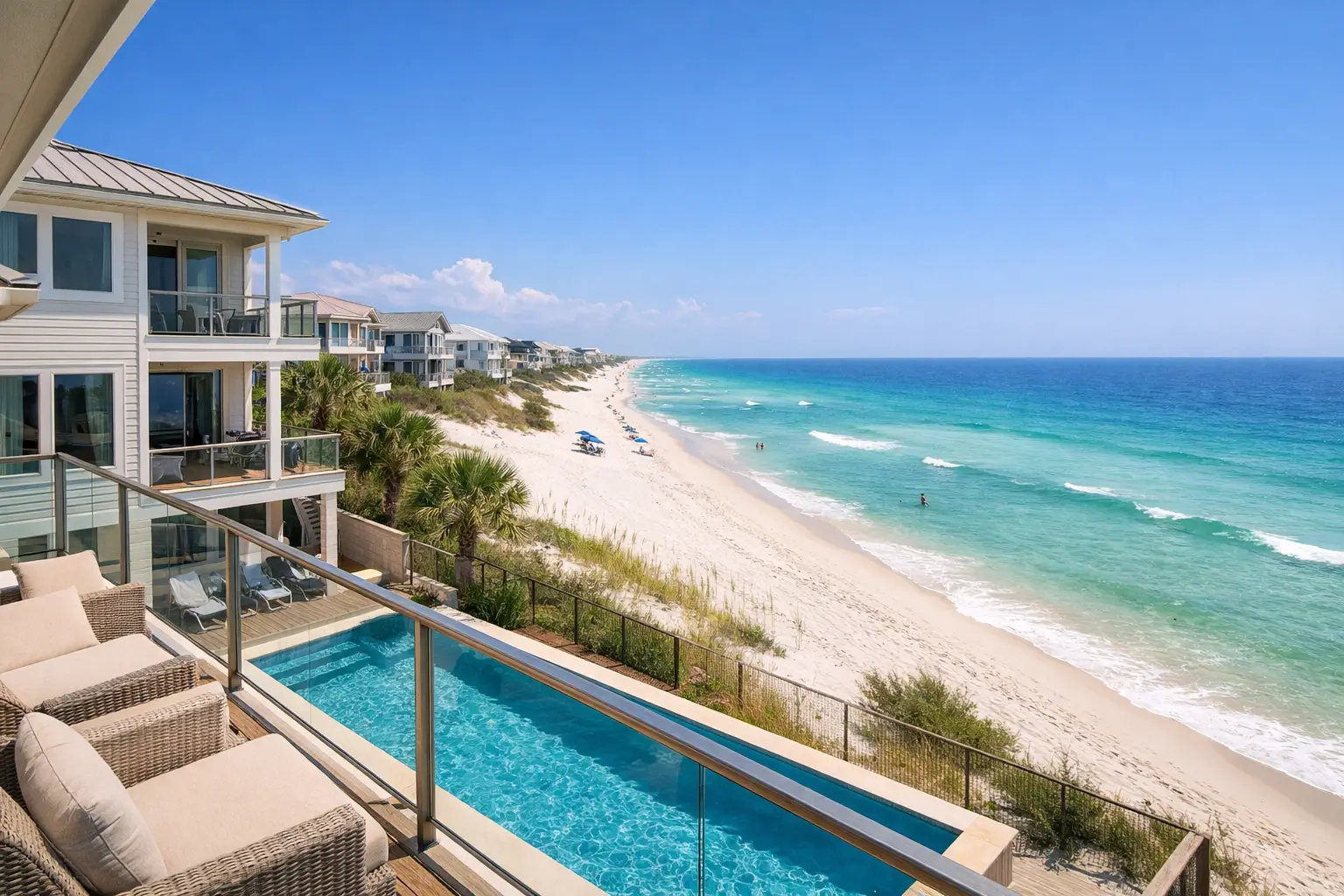
The difference between a strong coastal purchase and an expensive mistake is rarely the view. With gulf front homes on Emerald Coast, the premium is obvious the moment you step onto the balcony or walk the dune line. What is less obvious – and far more important – is how that premium holds up under insurance costs, rental performance, inventory pressure, construction quality, and future resale positioning.
For serious buyers, gulf-front ownership is not just about access to the sand. It is a capital decision tied to location scarcity, market timing, carrying costs, and long-term demand. Along the Emerald Coast, especially in high-demand stretches near 30A, South Walton, and Panama City Beach, those variables can create either durable value or unnecessary drag on returns.
Why gulf front homes on Emerald Coast command a premium
There is a simple reason these properties trade at the top of the market: there are not many of them, and demand remains broad. Gulf-front inventory is naturally constrained by geography. You can build inland, you can redevelop near the beach, but true gulf frontage is finite.
That scarcity matters because it supports pricing power across multiple buyer profiles. Some buyers want a second home with direct beach access. Others want a vacation rental asset with strong peak-season demand. Some are focused almost entirely on preserving capital in a high-barrier coastal market. When one asset class appeals to lifestyle buyers, luxury buyers, and investors at the same time, values tend to remain more resilient than in segments with a narrower audience.
Still, premium pricing alone does not make every gulf-front property a smart acquisition. Two homes can sit on the same stretch of coastline and perform very differently. Lot position, beach access, depth from the waterline, rental restrictions, floor plan, parking, and renovation needs all affect value in ways that broad market averages will not capture.
What separates a trophy asset from an average one
In coastal real estate, not all frontage is equal. A well-positioned gulf-front home typically combines strong visual impact with practical usability. Buyers often focus first on panoramic views, but layout and function tend to matter just as much over time.
A home with multiple gulf-facing bedrooms, generous outdoor living areas, covered balconies, and easy interior flow usually performs better in both resale and short-term rental markets. Parking can be a deciding factor. So can private beach access, pool placement, and whether the primary living spaces actually capitalize on the frontage.
Condition is another major divider. Some homes justify a premium because they are well-built, recently updated, and ready for immediate use or revenue generation. Others look compelling in photos but require meaningful capital after closing. Deferred maintenance, older windows and doors, dated mechanical systems, and storm-exposed exterior wear can turn a seemingly attractive purchase into a more expensive hold than expected.
The best acquisitions usually have a clear story. They are either best-in-class for their category or they offer a realistic path to becoming best-in-class through disciplined improvements.
Location inside the Emerald Coast matters
The Emerald Coast is not one uniform market. Buyer demand, rental intensity, lot characteristics, and neighborhood controls vary significantly from one area to the next.
Along 30A and South Walton, gulf-front homes often attract buyers prioritizing exclusivity, architectural quality, and long-term value retention. In Panama City Beach and parts of Bay County, buyers may find a different mix of pricing, rental demand, and lot utility. Some submarkets favor personal use with occasional rental income. Others are built for higher occupancy and stronger weekly revenue patterns.
That is why local context matters more than broad labels. A gulf-front home in one neighborhood may have tighter architectural standards, lower turnover, and stronger resale prestige. Another may offer better near-term rental performance but more volatility in competition and operating costs. Neither is automatically better. The right fit depends on whether the goal is personal enjoyment, income production, appreciation, or a blend of all three.
Evaluating gulf front homes on Emerald Coast as investments
Buyers who approach coastal property with discipline usually start with one question: what has to be true for this asset to work? That framework is useful because it moves the conversation beyond emotion.
If the property is intended as a vacation rental, projected revenue needs to be tested against actual market conditions, not optimistic assumptions. Bedroom count, bunk capacity, walkability, amenity package, and seasonality all influence top-line performance. So do county rules, HOA restrictions, management fees, cleaning costs, and turnover demands. Gross revenue can look impressive until operating expenses are fully accounted for.
If the property is primarily a second home, the investment case shifts. In that scenario, buyers are often weighing opportunity cost, long-term appreciation, liquidity, and the possibility of partial income offset through selective rentals. A lower-yield asset may still be a strong decision if it is located in a tightly held submarket with enduring demand and limited future supply.
For many buyers, the best gulf-front purchase sits in the middle. It delivers meaningful lifestyle value today while remaining financially rational when held over several years. That balance tends to outperform emotionally driven purchases that ignore carrying costs or operational realities.
The cost side is where many buyers get surprised
Insurance is the obvious line item, but it is not the only one. Gulf-front ownership often carries higher maintenance exposure because salt air, wind, humidity, and weather accelerate wear. Exterior finishes, windows, roofing, HVAC systems, decks, and pool equipment can all require more attention than non-coastal properties.
Then there is flood risk, reserve planning, and the possibility of periodic upgrades needed to stay competitive in the luxury rental or resale market. For older homes, compliance-related improvements and storm-hardening measures can materially affect the total cost of ownership.
That does not mean buyers should avoid the segment. It means underwriting needs to be realistic. Premium assets deserve premium analysis.
How to assess resale strength before you buy
The exit matters on the day you enter. That is especially true at the top end of the coastal market, where the buyer pool is narrower and expectations are higher.
Resale strength usually comes down to three factors: scarcity, usability, and presentation. Scarcity supports value when the property has true positional advantages such as a strong lot, direct frontage, or a location in a tightly held enclave. Usability affects how many future buyers will compete for it. Homes with awkward layouts, limited parking, or compromised access may still sell, but often to a smaller audience. Presentation is where updates, architecture, and finish quality shape whether the home feels current or dated.
Buyers should also think about what future inventory could compete with the asset. In some areas, redevelopment nearby can change the competitive field. In others, strict supply limitations make well-located gulf-front homes hard to replace. Understanding that difference can influence both entry pricing and hold strategy.
When a renovation play makes sense
Not every strong acquisition is turnkey. Some of the best opportunities come from homes with excellent frontage and weak execution. A dated floor plan, tired interiors, or underutilized outdoor space can often be corrected. A poor lot cannot.
The key is making sure renovation upside is real, not theoretical. Buyers should look at whether improvements will meaningfully increase rental performance, resale appeal, or both. Reconfiguring living spaces to maximize gulf views, upgrading kitchens and baths to luxury expectations, improving exterior durability, and enhancing outdoor amenities can all create value. But renovation budgets on the coast can escalate quickly, especially when timing, permitting, and contractor availability are tight.
A good renovation strategy starts with restraint. Not every dollar spent translates into market value. The right plan is usually the one that sharpens the property’s position within its competitive set rather than overbuilding for the submarket.
The role of expert guidance in a high-stakes coastal purchase
At this level, representation should go far beyond opening doors and forwarding listings. Buyers need market intelligence, property-level analysis, and candid advice about trade-offs. Sometimes the smartest move is to pursue the landmark home. Sometimes it is to buy the slightly less obvious property with better economics and stronger future flexibility.
That is where broker-level counsel makes a difference. A strategic advisor can pressure-test pricing, compare rental scenarios, identify hidden cost exposure, and help determine whether a property fits a personal use plan, an investment thesis, or both. For clients considering gulf-front homes across 30A, South Walton, and Bay County, firms like Venture South Real Estate bring value when the conversation moves past inventory and into positioning.
The right gulf-front home should feel exceptional when you arrive and still make sense when you run the numbers six months later. On the Emerald Coast, that combination is rare enough to be worth waiting for – and worth evaluating with care.