
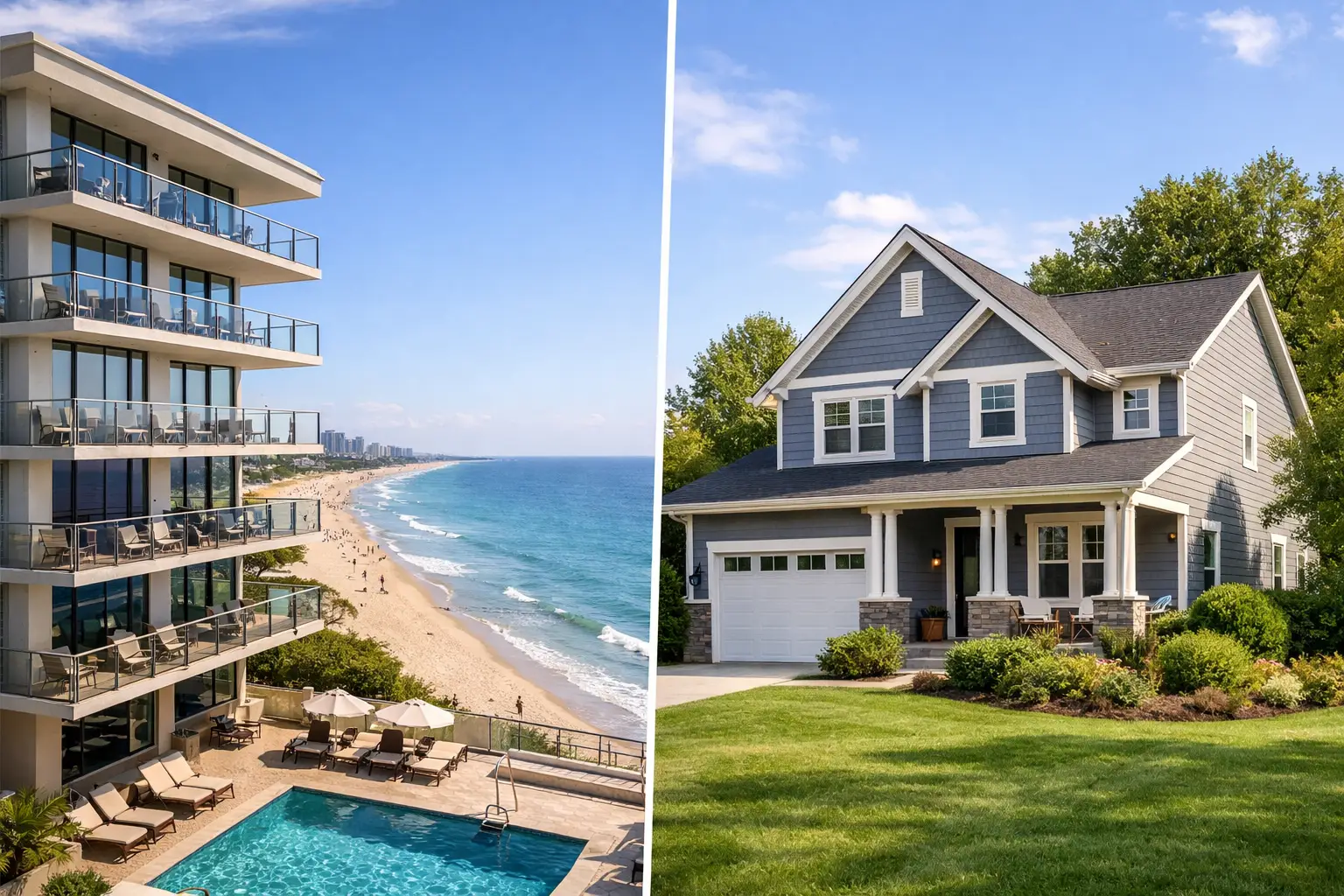
At the coast, the wrong property type can quietly erode returns long after the purchase closes. The beach condo vs single family home decision is not just about square footage or curb appeal – it shapes your carrying costs, rental strategy, flexibility, and exit options for years.
For buyers along 30A, Panama City Beach, and the broader Emerald Coast, this choice usually comes down to two priorities that do not always align perfectly: lifestyle and performance. A condo can offer simplified ownership and strong guest demand in the right building. A single family home can deliver more control, stronger branding as a rental, and a different class of long-term appreciation. Neither is automatically better. The better asset is the one that matches how you plan to use it, finance it, and eventually sell it.
Beach condo vs single family home: what actually changes
On paper, both property types can function as a second home, vacation rental, or long-term hold. In practice, they behave very differently.
A beach condo is usually the more operationally efficient purchase. Owners often benefit from amenities, shared exterior maintenance, and a product type that is familiar to vacation renters. If the building is well managed and well located, occupancy can be strong because travelers understand the offering immediately – beach access, pool, parking, and predictable convenience.
A single family home tends to be more individualized. That can be an advantage. Homes often command a different renter profile, especially larger groups and families seeking privacy, outdoor space, and a more exclusive coastal experience. But that upside comes with more owner responsibility, more variability in expenses, and greater dependence on the specific lot, layout, condition, and neighborhood positioning.
The key is not to ask which one is better in general. Ask which one performs better for your intended use case.
Start with the economics, not the aesthetics
Many buyers begin by comparing views, finishes, and distance to the water. Those matter, but they are secondary to the asset’s operating profile.
With a condo, the headline purchase price may be lower than a comparable beach-area home, but that is only part of the equation. HOA dues, special assessments, insurance allocations, rental restrictions, and reserve health all affect net performance. A condo that looks efficient at first glance can become less attractive if the association is underfunded or if monthly fees materially compress cash flow.
With a single family home, you avoid HOA structures in some cases, though not always. You also gain control over decisions like renovations, management, and property use. At the same time, you take on direct responsibility for exterior repairs, roofing, landscaping, storm preparation, pool maintenance if applicable, and the full insurance burden. That can mean higher volatility in annual costs, especially in coastal markets where wind and flood exposure are serious underwriting factors.
Sophisticated buyers usually do best when they compare projected net income rather than gross revenue. Gross numbers can make almost any coastal asset look compelling. Net numbers reveal whether the property actually supports your objectives.
Rental income is not just about nightly rate
Condos often perform well in high-demand vacation corridors because they are easy to market and easy to turn. Guests like amenities and low-friction access. Buildings with strong beachfront positioning or walkability can generate reliable booking patterns, particularly for shorter stays.
Single family homes can outperform condos on a per-stay basis when they offer something condos cannot – private pools, larger sleeping capacity, premium outdoor living, or a highly desirable location near the beach without shared walls or elevator wait times. That said, homes may have more seasonality in some segments, and their results can depend heavily on design quality, amenity package, and how effectively they are positioned in the rental market.
The stronger rental property is not always the one with the higher top-line revenue. It is the one with the healthier margin after management, maintenance, insurance, taxes, and downtime.
Lifestyle fit matters more than most investors admit
Even financially disciplined buyers tend to use coastal property emotionally. That is not a flaw. It is reality.
If you plan to spend meaningful personal time in the property, ownership convenience matters. Condos are often attractive for owners who want to arrive, enjoy the beach, and leave without worrying about exterior upkeep. For second-home buyers with limited time on the ground, that simplicity has real value.
Single family homes appeal to buyers who want privacy, autonomy, and a more residential experience. If you entertain often, need more room for extended family, or want a property that feels distinct rather than standardized, a home may better justify the operational complexity.
This is where many acquisitions go off course. Buyers purchase based on an idealized version of use rather than actual behavior. If you know you want minimal oversight and predictable ownership, forcing yourself into a home because it feels more prestigious can be expensive. If you know you care deeply about privacy and control, settling for a condo because it looks easier may create dissatisfaction from the start.
Beach condo vs single family home for maintenance and risk
Maintenance is one of the most underestimated differences between these two asset types.
A condo spreads many exterior responsibilities across the association. That can simplify ownership, but it does not eliminate risk. You are relying on the governance, financial discipline, and project timing of the association. Deferred maintenance, reserve shortfalls, or major structural work can lead to assessments that materially change your cost basis.
A single family home gives you direct control, which many experienced owners prefer. If the roof needs replacement or the exterior needs upgrading, you can act on your own timeline and according to your own standards. The trade-off is obvious: you also absorb the full cost and management burden.
From a risk standpoint, condos and homes also respond differently to insurance pressure and regulatory shifts. In a changing coastal environment, those variables deserve as much attention as finishes and views. Serious buyers should underwrite not just current costs, but the property’s resilience under less favorable scenarios.
Appreciation, resale, and buyer demand
Resale strategy should be part of the acquisition strategy.
Condos benefit from a broad buyer pool because they are often more accessible at the entry point, especially in premium beach markets. They can be highly liquid when the building, location, and amenity set are competitive. But condos are also more directly comparable. In many buildings, buyers can line up multiple similar units and negotiate aggressively based on floor, view, renovation quality, and fee structure.
Single family homes are typically less commoditized. If the property has a strong location, functional floor plan, and clear lifestyle appeal, it may command a more defensible resale position because fewer true substitutes exist. That uniqueness can support appreciation. It can also work against you if the home is overly customized, poorly maintained, or priced outside the market’s logic.
In coastal luxury and upper-middle-market segments, scarcity often matters. A well-positioned home near the water may attract buyers who are less fee-sensitive and more focused on exclusivity. A premium condo can still perform very well, but the value story tends to depend more on building quality, rules, and comparative inventory.
When a condo is usually the stronger choice
A condo is often the better fit when you want lower day-to-day ownership complexity, a more approachable price point, and a property that aligns with standard vacation-rental demand. It can also make sense if you value amenities, walkability, and a lock-and-leave second-home experience.
For many buyers entering the Emerald Coast market, condos provide a cleaner way to establish a coastal position without immediately taking on the full operational load of a detached home. The best opportunities are usually in buildings with sound financials, disciplined management, strong guest appeal, and no unpleasant surprises hiding in the association documents.
When a single family home is usually the stronger choice
A home is often the better fit when privacy, control, and differentiated rental appeal sit at the top of your priority list. It may also be the stronger long-term hold if you are targeting a specific neighborhood, larger guest groups, or a luxury positioning strategy that condos cannot replicate.
This route tends to reward buyers who are comfortable underwriting more variables and who see value in controlling the asset completely. In the right location, with the right amenity package and a disciplined renovation plan, a single family home can become both a high-performing rental and a more distinctive resale product.
The right acquisition usually emerges from disciplined analysis rather than instinct. At Venture South Real Estate, that means weighing projected income, ownership costs, association dynamics, use patterns, and exit potential before a property ever reaches the offer stage.
The smartest coastal purchase is rarely the one that looks best in listing photos. It is the one that still makes sense after you account for fees, friction, seasonality, and your real priorities as an owner.