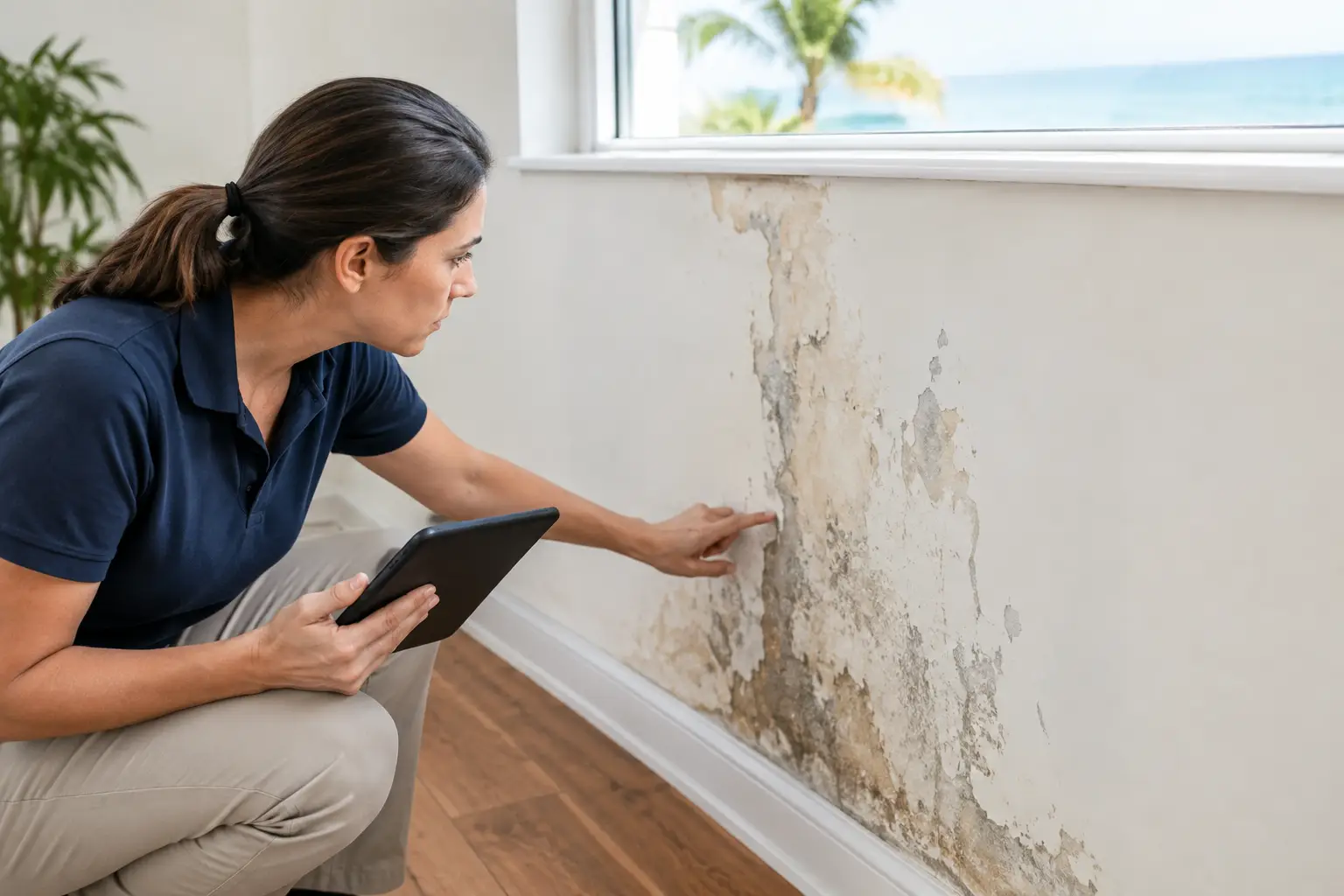
A faint musty odor in a polished coastal home is not a cosmetic detail to dismiss. Along 30A, Panama City Beach, and the Emerald Coast, salt air, wind-driven rain, elevated humidity, and heavy HVAC use create conditions where moisture can move behind finishes long before it becomes an obvious leak. Knowing the top signs of hidden moisture helps buyers protect a major acquisition, sellers avoid a late-stage contract issue, and investors make renovation decisions with clearer financial discipline.
Moisture is not automatically a deal-breaker. In coastal real estate, the more relevant question is whether the source has been identified, corrected, and documented – or whether the condition suggests an ongoing risk to structure, indoor air quality, insurance, rental operations, or resale positioning.
Why Hidden Moisture Carries More Weight Near the Coast
A home can look immaculate while moisture is accumulating behind drywall, beneath flooring, around windows, or inside a roof assembly. Coastal properties face a more demanding operating environment than inland homes. High humidity can cause condensation on cool surfaces, storms can drive water into small openings, and vacation homes may sit closed for extended periods with HVAC settings that do not adequately manage interior humidity.
For a primary residence, a moisture issue may be detected quickly through daily use. For a second home or short-term rental, it can develop between visits. That distinction matters. A small unresolved intrusion can turn into damaged trim, microbial growth, flooring failure, or a larger repair project just as a property is being prepared for peak rental season or brought to market.
The cost also depends on location and construction. A minor window flashing repair is very different from water entering through a roof transition, an exterior cladding system, or an improperly detailed balcony. The right response is proportionate investigation, not immediate alarm or casual reassurance.
Top Signs of Hidden Moisture to Watch For
Persistent musty or damp odors
An odor that returns after cleaning, especially when a home has been closed, deserves attention. It may originate in an HVAC closet, under cabinetry, in a crawlspace, around a bathroom wall, or behind furnishings placed against an exterior wall.
A musty smell does not establish the source or severity on its own. Still, it is a useful signal because odors often appear before staining does. In a coastal property, ask whether the home has been vacant, how humidity is controlled, and whether the HVAC system has been regularly serviced and drained properly.
Discoloration, bubbling paint, or changing wall texture
Look closely at ceilings, baseboards, corners, window trim, and walls near showers or laundry areas. Yellow-brown staining may indicate an active or historic leak. Bubbling paint, peeling finishes, swollen trim, or drywall that feels soft can indicate moisture trapped behind the surface.
Fresh paint should not be treated as proof that a condition is resolved. It may simply be part of a well-executed cosmetic refresh, particularly before a listing. But if freshly painted areas have an uneven sheen, recurring discoloration, or adjacent warped materials, further evaluation is justified.
Flooring that cups, lifts, separates, or feels uneven
Wood floors can cup or crown as moisture levels change. Luxury vinyl plank may lift at seams or feel soft if the subfloor has been affected. Tile can loosen or sound hollow when moisture compromises the setting material or subfloor below.
Not every floor irregularity is moisture-related. Settlement, installation quality, and normal material movement all play a role. The concern increases when the issue is concentrated near exterior doors, windows, kitchens, bathrooms, or ground-level walls, or when it appears alongside stains and odors.
Window and door clues
Coastal windows and doors are critical parts of the building envelope. Watch for condensation between panes, deteriorated caulk, swollen jambs, stained sills, rusted fasteners, or sticking doors that were once easy to operate. Wind-driven rain can exploit small failures in flashing, seals, and exterior penetrations.
A window issue may be limited to maintenance, but it can also point to water traveling into the wall assembly. For higher-value homes, particularly those exposed to the Gulf or positioned near open water, a qualified assessment of the affected area is often a prudent part of due diligence.
Cabinet damage around plumbing fixtures
Open the cabinets beneath sinks and inspect the base, back wall, shutoff valves, and supply lines. Swollen particleboard, rusted hardware, staining, or a persistent odor can reveal a slow plumbing leak that has remained out of sight.
Bathrooms deserve the same attention. Loose toilets, cracked grout, deteriorated shower caulk, and spongy flooring near tubs or showers can allow water into subfloors and adjacent walls. These are common repair items, but delayed repairs can become materially more expensive.
HVAC performance and humidity patterns
An air-conditioning system that cools but leaves rooms clammy is not performing the full job required in a coastal climate. Excessive indoor humidity can create condensation on vents, windows, ductwork, and other cool surfaces. It can also accelerate mildew growth in closets, utility rooms, and areas with limited air circulation.
Ask about thermostat settings during vacancies, dehumidification equipment, condensate drain maintenance, and service records. In a vacation rental, these details affect more than comfort. They can influence guest reviews, operating costs, maintenance calls, and the durability of finishes and furnishings.
Exterior deterioration at vulnerable transitions
Some of the most significant moisture conditions begin outside. Pay attention to roof penetrations, chimney and wall flashings, balcony connections, exterior light fixtures, hose bibs, siding joints, and areas where decks meet the home. Cracked sealants and failed flashing may appear minor from the ground but can permit repeated water intrusion.
Stucco cracking, soft or deteriorated wood trim, efflorescence on masonry, and peeling exterior paint also merit review. Salt air and sun create normal maintenance demands, so exterior wear is expected. The question is whether maintenance has kept pace with exposure or whether the damage suggests water is reaching concealed components.
How Buyers Should Investigate Without Overreacting
A standard home inspection is an essential starting point, not always the final answer. If an inspector identifies suspicious staining, elevated moisture readings, visible microbial growth, roof concerns, or conditions that limit access, buyers should consider a focused evaluation by the appropriate specialist. Depending on the finding, that could mean a licensed plumber, HVAC contractor, roofing professional, building-envelope consultant, or qualified moisture assessment provider.
Use the inspection period strategically. Request available repair invoices, remediation documentation, roof records, HVAC service history, and any prior water-loss information. Confirm whether repairs addressed the underlying source, not just the visible finish. For an investment property, also assess timing: a repair that takes a unit offline during a high-demand rental window has a different financial impact than the same repair completed in an offseason.
Inspection findings should be interpreted in context. A well-documented, professionally corrected past leak may carry less risk than an unexplained active condition in a recently renovated home. The strongest purchase decisions combine technical evidence with a realistic view of repair cost, rental disruption, insurance implications, and long-term ownership plans.
What Sellers Can Do Before a Listing
Sellers benefit from addressing known moisture concerns before photography, showings, and contract negotiations. A clean, well-documented repair strategy protects market positioning better than hoping a buyer will overlook a recurring stain or odor. In premium coastal segments, buyers often expect the condition of the asset to support the price and the lifestyle promise.
Start by correcting the source, then repair affected materials appropriately. Keep invoices, warranties, photographs, and service reports organized. If remediation was required, retain the scope of work and any clearance documentation. Transparency does not weaken a listing when the issue has been handled correctly; it gives serious buyers and their advisors a factual basis for confidence.
Avoid cosmetic cover-ups. They can create distrust when a condition appears during inspection, and they may lead to credits, renegotiation, or a lost contract at the point when leverage matters most.
Protecting the Asset After Closing
Coastal ownership requires a maintenance plan, not just occasional attention after storms. Regular roof and exterior inspections, sealant maintenance, HVAC servicing, humidity monitoring, and prompt response to plumbing drips help preserve both the home and its income potential. Properties that are vacant part of the year need particular discipline around thermostat settings, condensate drains, and periodic interior checks.
For buyers, sellers, and investors, the most valuable move is not assuming the worst when a clue appears. It is identifying the source early, documenting the correction, and making decisions based on the condition of the asset rather than the appearance of the finishes.