
A beach home can lose value in ways inland properties rarely do. Salt air shortens material life, humidity exposes weak finishes fast, and buyers at the upper end of the market notice every shortcut. That is why renovations that increase beach home value are rarely about flashy upgrades alone. The strongest returns usually come from improvements that protect the asset, elevate the experience, and support resale or rental performance at the same time.
Along Florida’s Gulf Coast, the best renovation decisions are market-specific. A gulf-front second home, a 30A luxury residence, and a Panama City Beach vacation rental do not benefit from exactly the same upgrade strategy. Some projects raise perceived value immediately, while others pay off through lower maintenance, stronger insurance positioning, or better nightly rates. The goal is not to renovate more. It is to renovate with precision.
Which renovations that increase beach home value matter most?
The highest-value projects tend to fall into three categories: exterior resilience, kitchen and bath modernization, and improvements that sharpen the home’s coastal lifestyle appeal. If a property is likely to serve as a vacation rental, there is a fourth category as well – upgrades that improve occupancy, durability, and guest satisfaction.
That distinction matters. A seller preparing a luxury listing may prioritize visual impact and buyer confidence. An investor may care more about wear resistance, clean turnover, and revenue lift. The right scope depends on whether the property’s next chapter is personal use, premium resale, or income production.
1. Exterior improvements that reduce coastal wear
For beach homes, exterior work is not cosmetic trivia. It signals whether the property has been managed well in a demanding environment. High-performing improvements often include impact-rated doors and windows, quality roofing materials, upgraded siding or exterior cladding, and corrosion-resistant hardware.
These projects do more than improve curb appeal. They can strengthen insurance conversations, reassure buyers who understand storm exposure, and reduce the discount that purchasers often apply when they expect near-term capital work. In many cases, a beautiful interior will not fully overcome buyer hesitation if the roof, openings, or exterior envelope feel dated.
Paint also deserves more strategic attention than it typically gets. On a coastal home, the wrong exterior paint system can age quickly and undermine the property’s perceived quality. A durable repaint in the right palette can sharpen first impressions, but it works best when paired with trim, lighting, and entry updates that make the home feel intentionally positioned rather than merely refreshed.
2. Kitchens that match price point and lifestyle
In coastal markets, the kitchen carries weight beyond daily function. It often anchors open-concept living, gathering, and entertaining, especially in second homes and vacation properties designed around group use. That makes kitchen renovations one of the most reliable value drivers when the execution matches the property’s tier.
The phrase “match the tier” is critical. Installing a luxury chef’s kitchen in a mid-market rental does not automatically create a return. In contrast, replacing dated cabinetry, worn counters, poor lighting, and low-end appliances in a premium beach home may be essential just to compete.
The strongest kitchen upgrades usually include durable countertops, quality cabinet fronts, modern hardware, layered lighting, and layouts that improve flow. Buyers also respond to smart storage, larger islands, and finishes that feel clean and coastal without leaning into cliché. Overly themed beach design often dates faster than restrained, upscale materials.
Bathroom renovations that increase beach home value
Bathrooms influence both perceived maintenance quality and emotional response. In beach properties, buyers and guests expect a clean, elevated, spa-adjacent feel. Old fiberglass inserts, builder-grade vanities, poor ventilation, and dated tile can pull down the impression of the entire home.
Well-executed bathroom renovations do not need to be excessive. Frameless glass, quality tile, modern vanities, improved mirrors and lighting, and a better shower layout can create meaningful lift. In luxury segments, primary baths carry even more influence, especially when they support a resort-style feel.
Ventilation matters here more than many owners realize. Coastal humidity punishes neglected bathrooms, and buyers notice mildew risk quickly. Upgraded exhaust systems, better waterproofing, and moisture-resistant materials may not photograph like statement tile, but they help protect value.
4. Flooring built for sand, moisture, and turnover
Flooring is one of the clearest examples of where beach home renovation should be practical first and aesthetic second. Soft materials that show staining, trap sand, or wear unevenly tend to underperform, especially in rental-heavy properties.
Wide-plank tile and high-quality luxury vinyl can be effective depending on the home’s price point and use profile. Natural hardwood can work in the right setting, but it requires more disciplined climate control and maintenance. If the property sees heavy guest traffic, durability often wins over prestige.
Consistent flooring throughout the main living areas can also make a home feel larger and more current. That visual continuity is especially valuable in homes with open layouts and strong natural light.
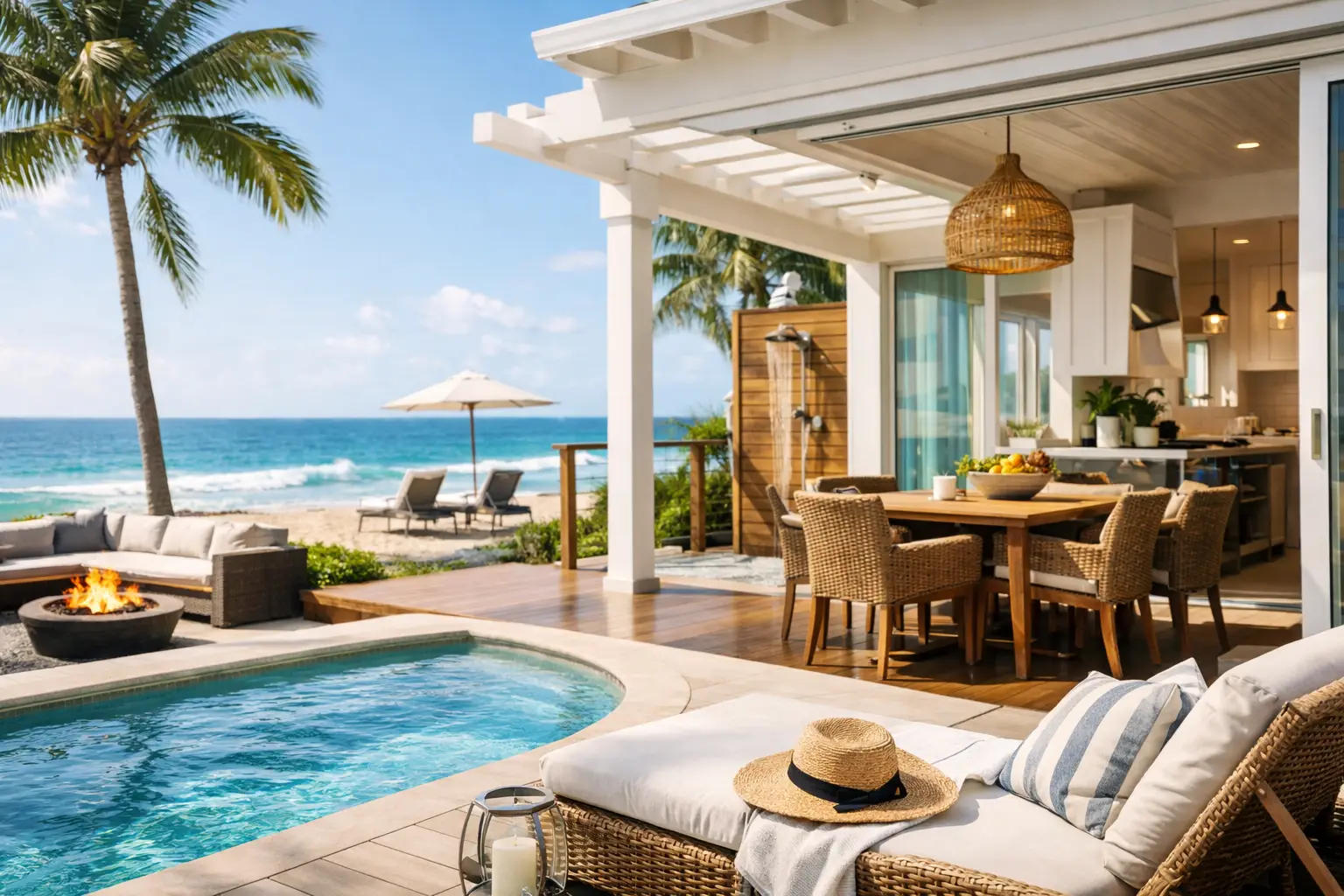
5. Outdoor living that feels like usable square footage
At the coast, outdoor space is not secondary space. It is part of the core value proposition. Buyers are paying for a lifestyle tied to views, air, entertaining, and easy transitions between inside and out. When outdoor areas feel neglected or underdesigned, the home leaves value on the table.
Strategic improvements may include upgraded decking, covered lounge areas, outdoor kitchens, integrated lighting, shade features, and pool-area enhancements where appropriate. The emphasis should be on function, not excess. A well-planned outdoor area that feels private, comfortable, and durable often outperforms a larger but poorly organized one.
This is also where maintenance discipline shows. Rusted fixtures, weathered railings, and mismatched surfaces suggest deferred care. In contrast, a polished exterior living environment helps buyers mentally justify premium pricing.
6. Windows, doors, and light
Beach buyers want light, but they also want confidence. Updated windows and doors can improve both. Larger openings, better sightlines, and cleaner frames enhance the coastal experience, while impact-rated products support storm resilience and long-term performance.
There is a pricing strategy angle here as well. Homes that feel brighter, quieter, and more secure often show better and trade with less negotiation friction. That does not mean every property needs a full reconfiguration. Sometimes replacing dated sliders or improving a main living area’s connection to a deck or patio creates the biggest shift in perceived value.
7. Smart storage and owner controls for rental properties
For investor-owned beach homes, value is not just about finishes. It is also about operational performance. Locked owner closets, smarter laundry setups, gear storage, and durable drop zones can make a vacation rental easier to manage and more appealing to guests.
This category rarely gets top billing in design conversations, but it can materially improve turnover efficiency and reduce wear. The same applies to smart locks, thermostats, leak detection, and security systems. These are not headline-making renovations, yet they can strengthen income consistency and asset protection.
8. Energy efficiency and climate management
Energy costs and moisture control matter more on the coast than many out-of-state owners expect. Upgraded HVAC systems, dehumidification support, insulation improvements, and tighter building performance can protect interiors and improve comfort.
From a resale perspective, these are often confidence-building investments. Buyers may not pay dollar-for-dollar for every mechanical upgrade, but they are far more likely to value a home that feels dry, comfortable, and professionally maintained. In higher-end properties, invisible performance upgrades often support visible pricing power.
9. Layout adjustments that improve occupancy and livability
Not every value gain comes from finishes. Sometimes the strongest move is reworking how the home lives. Adding a bunk room, improving bedroom privacy, creating a dedicated office nook, or opening a dated kitchen-to-living connection can change both appeal and revenue potential.
That said, layout work requires discipline. Structural changes can be expensive, and not every floor plan warrants a major reconfiguration. The decision should be driven by what the market rewards in that specific submarket and price band.
Where owners over-improve
One of the most common mistakes in renovations that increase beach home value is assuming more expensive always means more valuable. It does not. A house in a rental-focused corridor may benefit more from durable, attractive, easy-to-maintain upgrades than from highly customized luxury finishes. On the other hand, a premium 30A resale may require a sharper level of finish to compete at the top of the market.
Over-improvement usually shows up in three ways: spending heavily in rooms buyers do not prioritize, choosing finishes that are too personal, or renovating without regard to neighborhood ceiling. The right benchmark is not what the owner likes most. It is what the market rewards.
This is where broker-level guidance becomes useful before construction starts, not after. The most effective renovation plans are built around likely buyer profile, target price, comparable inventory, and if relevant, short-term rental economics. Venture South Real Estate often sees the difference between owners who renovate for applause and owners who renovate for leverage.
A beach home should feel elevated, but it also has to perform. The best renovation dollars go toward projects that make the property more resilient, more marketable, and more aligned with how buyers or guests actually use coastal real estate. If a planned upgrade does all three, it is usually worth a serious look.