
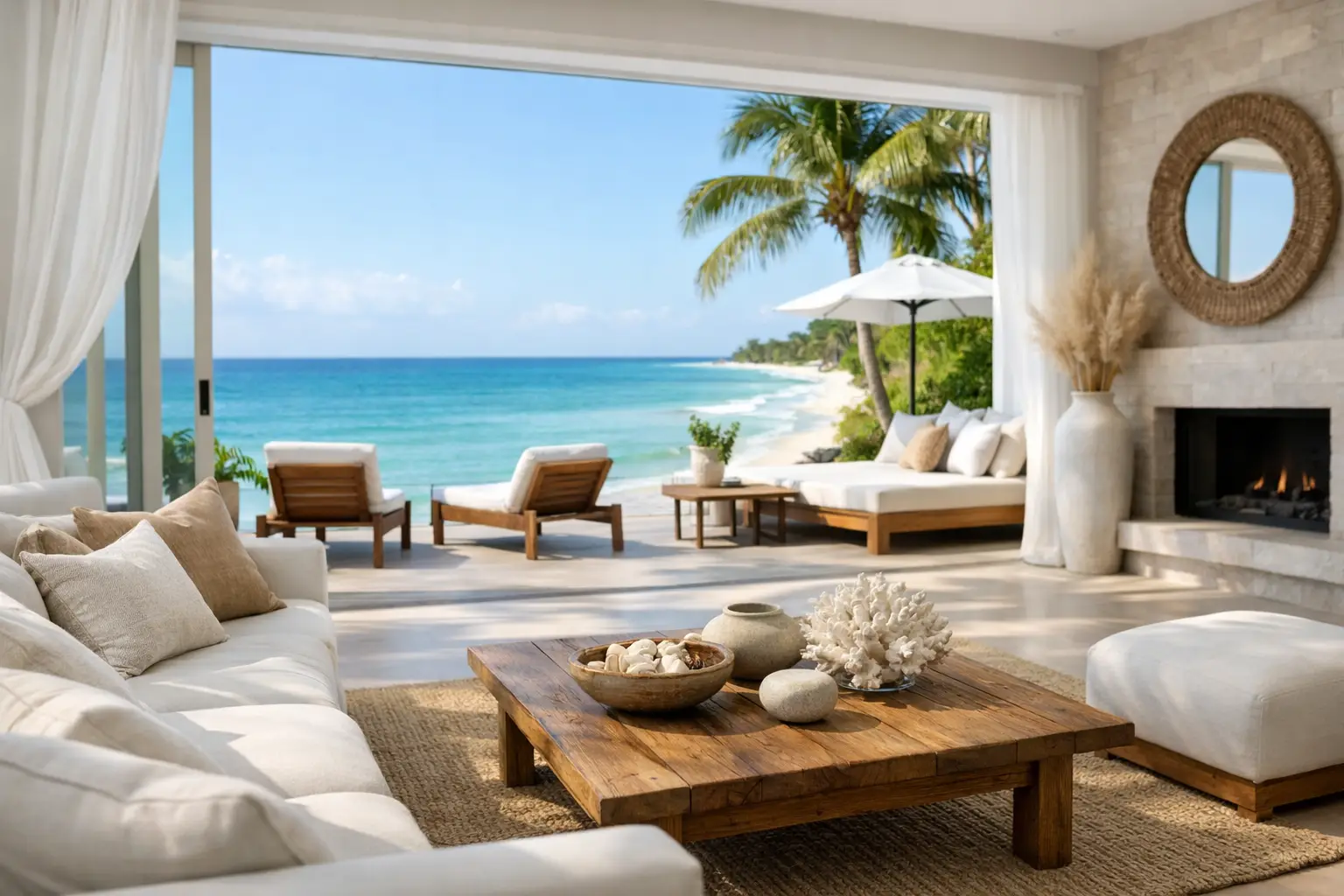
A gulf-view property can lose momentum fast if buyers walk in and see sunscreen clutter, worn textiles, and rooms that feel more rental than residence. Knowing how to stage a luxury beach home is less about adding decor and more about controlling perception – value, condition, lifestyle, and scarcity all have to register within minutes.
In high-end coastal markets, staging is a positioning exercise. Buyers are not just evaluating square footage and finishes. They are deciding whether the home feels exclusive, well maintained, and worthy of a premium price. For second-home buyers and investors alike, the presentation needs to support both an emotional response and a rational one.
How to stage a luxury beach home with buyer psychology in mind
Luxury beach buyers tend to purchase a blend of experience and asset quality. They want the ease of coastal living, but they also notice durability, layout efficiency, privacy, and whether the home appears protected against the wear that comes with salt air and high traffic. That means staging should never feel overly themed or temporary.
A strong presentation signals that the property has been cared for at a high level. It should feel elevated, calm, and expensive without becoming fussy. The most effective luxury staging allows buyers to picture sunrise coffee on the terrace, guests around the dining table, and a lock-and-leave second-home lifestyle that still feels polished and private.
This is where sellers often make the wrong move. They lean too hard into coastal motifs, overfill rooms with furniture, or leave vacation-rental cues in plain sight. None of that supports premium positioning. At the luxury level, restraint usually outperforms personality.
Start with architecture, light, and the view
The first principle in how to stage a luxury beach home is simple: the house itself should lead. If the property has gulf views, floor-to-ceiling glass, wide-plank flooring, vaulted ceilings, or a strong indoor-outdoor flow, staging should reinforce those assets rather than compete with them.
Window treatments should be minimal if privacy allows. Heavy drapery can flatten a waterfront room and interrupt the one feature buyers will pay a premium for. Furniture placement should direct the eye toward the horizon, outdoor living areas, or architectural focal points such as a fireplace, statement staircase, or chef’s kitchen.
Lighting matters just as much. Coastal light is a selling feature, but it can also expose every flaw. Scuffed walls, hazy glass, oxidized hardware, and dingy grout all become more visible near the water. Before a single accessory comes in, the home needs to be cleaned, repaired, and edited at a near-hotel standard.
Edit the interiors to feel tailored, not vacant
Luxury staging is rarely about filling space. It is about giving each room a clear purpose and a confident sense of proportion. In beach properties, oversized sectionals, bulky case goods, and too many accent chairs can make even large rooms feel crowded.
The better approach is curated scale. Use fewer pieces, but choose furnishings that fit the architecture and leave generous circulation paths. A living room should read as conversational and view-oriented. A bedroom should feel quiet and retreat-like. A bunk room in a vacation-oriented home can still look refined if bedding, lighting, and styling are disciplined.
Color should stay soft, but not bland. Sand, ivory, driftwood, muted stone, and warm whites generally perform well because they reflect light and support a clean coastal palette. The key is avoiding anything that reads cheap, overly nautical, or trend-driven. Bright turquoise accents and obvious beach signage can work in lower price points, but they usually reduce sophistication in a luxury setting.
Remove the signs of rental wear
For many Emerald Coast properties, buyers are evaluating a potential second home, an income-producing asset, or both. That creates a staging challenge. The home needs to feel aspirational, but it cannot ignore operational reality.
If the property has functioned as a short-term rental, remove the evidence that makes it feel transactional. Starter packs, laminated house rules, supply stacks, excess bar stools, and crowded sleeping configurations can all undercut perceived value. The goal is not to hide utility. The goal is to present the property first as a premium coastal residence.
That said, it depends on the buyer profile. In a highly investment-driven segment, a staged owner closet, a well-organized laundry area, or a polished outdoor storage solution can actually help, provided it is presented neatly and without clutter. Strategic staging should reflect the most likely buyer, not a generic luxury formula.
Focus on the kitchen, primary suite, and outdoor living
Not every room carries equal weight. In most luxury beach homes, buyers make fast judgments based on three zones: the kitchen, the primary suite, and the outdoor living areas.
The kitchen should feel clean-lined and functional. Clear the counters aggressively, leaving only a few elevated items such as a sculptural bowl, a coffee setup, or a simple arrangement of greenery. If the kitchen has premium appliances, custom cabinetry, or a large island, staging should make those features legible immediately.
The primary suite should sell retreat and privacy. Bedding should be layered but crisp, with quality textiles and no visual noise. Nightstands, lamps, and seating should feel balanced. If the suite opens to a balcony or has water views, make that connection obvious.
Outdoor living often determines whether a coastal property feels truly high-end. Seating areas should be arranged for conversation and view enjoyment, not scattered randomly. Pool decks need to look resort-caliber. Dining areas should suggest actual entertaining capacity. If cushions are faded, planters are tired, or railings are weathered, buyers will notice – and they will often overestimate the cost of correcting it.
Use texture and material quality to signal value
In luxury coastal homes, buyers read material quality quickly. They may not consciously catalog every finish, but they can feel when a room is working at a premium level. Staging should support that impression through texture, restraint, and consistency.
Natural fibers, tailored upholstery, substantial rugs, ceramic and stone accessories, and quality bedding tend to perform better than glossy or highly decorative items. The objective is to create a quiet backdrop that makes the home’s permanent finishes feel more expensive.
Art deserves particular attention. Large-scale, contemporary, or abstract pieces usually outperform busy gallery walls or heavily themed coastal art. The home should feel curated, not souvenir-driven. If existing artwork is too personal or too casual, replacing even a few pieces can materially improve presentation.
Stage for photography and in-person showings differently
One of the more overlooked parts of how to stage a luxury beach home is understanding that online presentation and in-person experience are related, but not identical. Photography needs clarity, symmetry, and visual order. Showings need atmosphere, flow, and emotional ease.
A room that photographs beautifully may feel slightly sparse in person. A room that feels comfortable in person may look crowded in listing photos. The right solution is usually a middle ground, with enough furniture and styling to establish scale while preserving openness.
This is also why timing matters. Coastal light changes dramatically by hour, and so do exterior spaces. Twilight imagery may flatter a pool and outdoor kitchen, while morning light may better showcase gulf-facing living spaces. Presentation should be coordinated with photography, not treated as a separate task.
Make smart updates before you stage
Staging cannot solve a product problem. If the property has dated light fixtures, overly personalized paint, worn hardware, old bar stools, or tired bath accessories, those items should often be upgraded before staging begins. Cosmetic edits can have an outsized effect on perceived value, especially when buyers are comparing a home against newer inventory or recently renovated competition.
The trade-off is budget discipline. Not every home needs a full pre-listing refresh. In some cases, a targeted plan delivers a stronger return: paint, lighting, linens, exterior styling, and selective furniture replacement. In others, especially at the upper end of the market, partial improvements can make the untouched areas stand out more. That is where market-specific advice matters.
For sellers along 30A, Panama City Beach, and the broader Emerald Coast, staging decisions should be tied to expected buyer profile, list price strategy, and the competitive set. Venture South Real Estate approaches that process with the same lens applied to any high-value asset – presentation should support pricing, shorten decision time, and strengthen the quality of offers.
The goal is not decoration – it is leverage
Well-staged luxury beach homes feel effortless, but the strategy behind them is precise. Every choice should help a buyer see the property as rare, well-maintained, and ready to enjoy without immediate friction. That is what supports stronger pricing power.
When a coastal home is staged correctly, buyers stop thinking about what needs to be fixed or removed. They start calculating how soon they can make it theirs. That shift is where presentation stops being cosmetic and starts becoming leverage.