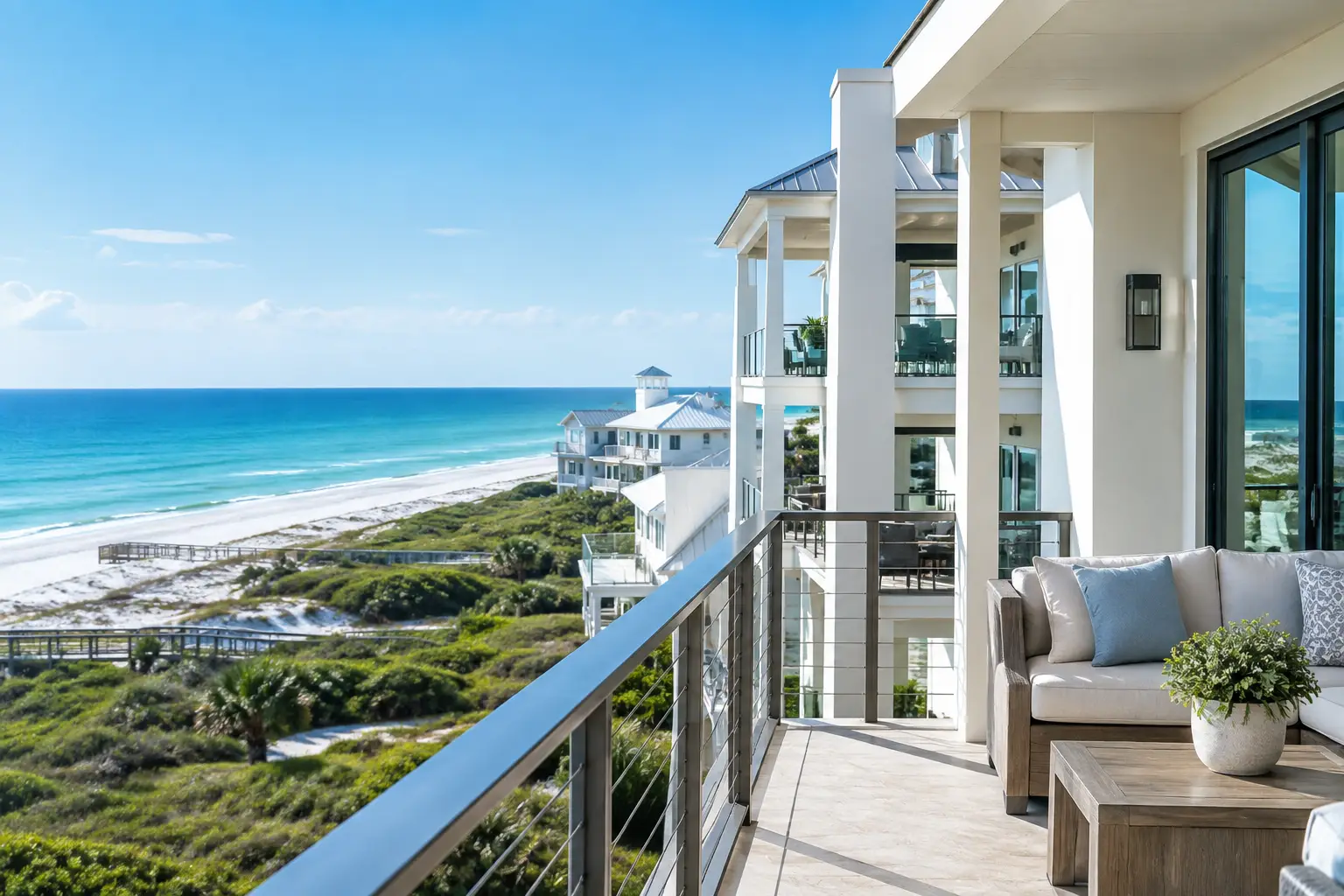
Alys Beach condos appeal to buyers who want more than proximity to the Gulf. They are drawn to a deliberately designed coastal environment where white stucco architecture, walkable streets, private amenities, and strict visual standards create a highly recognizable product. That distinction can support long-term desirability, but it also makes the buying process more nuanced than a conventional beach condominium purchase.
For a second-home buyer, the decision often begins with lifestyle. For an investor, it should also begin with structure: ownership costs, rental permissions, demand patterns, exit strategy, and the specific features that will protect value when inventory shifts. In Alys Beach, the best acquisition is rarely just the available unit. It is the residence whose location, layout, association framework, and pricing align with the buyer’s intended use.
Why Alys Beach Condos Command Attention
Alys Beach occupies a distinctive position along Scenic Highway 30A. Its architecture is cohesive by design, drawing from Caribbean and Mediterranean influences while using a restrained palette and carefully controlled streetscape. The result is a community with a strong visual identity, which matters in a market where buyers often compare properties across several 30A neighborhoods.
That consistency creates both appeal and scarcity. Buyers are not simply purchasing square footage near the water. They are acquiring a place within a branded, master-planned environment with a specific standard of design, maintenance, and experience. Walkability to the beach, parks, restaurants, community events, and resort-style amenities can carry meaningful weight, particularly for buyers who value a turnkey second residence.
From an investment perspective, that differentiation can strengthen resale positioning. A residence with a compelling view corridor, a desirable location within the community, quality finishes, and easy access to the beach may compete from a position of relative strength even when the broader coastal market becomes more selective. It does not eliminate market risk, but it can reduce the degree to which a property competes solely on price.
The Ownership Analysis Behind Alys Beach Condos
Before evaluating finishes or furniture packages, buyers should understand exactly what they are purchasing. Condominium ownership can be efficient for owners who prefer professional exterior maintenance and a lock-and-leave lifestyle. It also means reviewing the association’s operating structure with care.
Monthly assessments can cover valuable services and amenities, but they are a material part of the annual ownership cost. A disciplined review should consider current dues, reserve funding, insurance exposure, recent or anticipated capital projects, rental administration requirements, pet rules, parking, storage, and any restrictions that affect personal use. The association’s financial condition is not a secondary document review. It is part of the asset analysis.
Insurance deserves particular attention in Florida’s coastal market. The cost and availability of master policy coverage, deductibles, and potential special assessments can affect both annual carrying costs and future buyer perception. An attractive purchase price can lose its advantage quickly if the ownership structure creates unpredictable expenses.
The same is true of unit classification and governing documents. Not every residence in a luxury coastal community functions identically from an ownership, rental, or maintenance standpoint. Buyers should verify what responsibilities belong to the association, what remains with the owner, and whether planned modifications are permitted. A change as simple as updating exterior elements, installing certain technology, or altering a terrace can be subject to approval.
Rental Potential Requires More Than a Revenue Estimate
For buyers considering vacation rental income, the central question is not whether visitors want to stay in Alys Beach. Demand for a polished 30A experience is well established. The more useful question is whether a particular unit can produce income that supports the buyer’s return objectives after all operating costs are considered.
Gross rental revenue is only the starting point. A credible pro forma accounts for management fees, cleaning, platform fees, lodging taxes, utilities, insurance, association dues, repairs, replacement reserves, furnishings, and vacancy. It should also recognize that an owner who reserves prime holiday and summer dates for personal use may materially change the annual revenue profile.
Rental rules must be confirmed before an offer is structured. Some communities, buildings, or associations may impose minimum stay requirements, registration procedures, occupancy limits, or other operating standards. These rules can protect the residential character of a property, but they may not match every investor’s model. A buyer prioritizing rental yield may reach a different conclusion than a buyer focused on occasional income and frequent personal use.
Seasonality matters as well. Peak periods can be exceptionally valuable along 30A, yet underwriting should not rely on peak-rate assumptions alone. A conservative approach tests performance under several scenarios: a strong year, a normalized year, and a softer demand cycle. This provides a clearer picture of whether the property remains financially comfortable when bookings or rates moderate.
Location Within the Community Changes the Equation
Two Alys Beach condos with similar interiors can have significantly different market positions. Proximity to beach access, privacy, natural light, outdoor living areas, floor level, views, noise exposure, and parking convenience all influence both use and resale appeal.
A buyer who plans to use the residence primarily as a family retreat may place a premium on access to green space, pools, dining, and walkable conveniences. An investor may prioritize bedroom count, sleeping flexibility, outdoor entertaining areas, and features that photograph well in rental marketing. Neither approach is wrong. The mistake is paying a premium for attributes that do not serve the intended ownership strategy.
The strongest properties usually perform well across multiple buyer profiles. A well-designed unit with meaningful outdoor space, a practical layout, premium finishes, and a location that supports both beach access and privacy can attract a wider resale audience. Conversely, a unit with a narrow appeal may require more precise pricing when it is time to sell.
Pricing Strategy Should Look Beyond the Asking Price
Luxury coastal properties are often priced around scarcity, design, and lifestyle, not just recent closed sales. Comparable sales remain essential, but a meaningful analysis must adjust for location, condition, furnishings, rental history, view protection, and the quality of the ownership experience.
Buyers should distinguish between a premium that is supported by durable advantages and a premium driven primarily by seller expectations. A residence that has been thoroughly updated, professionally furnished, and positioned in a superior location may warrant a higher basis. A similar asking price for a less favorable floor plan or location may be harder to defend.
Timing can also affect negotiating leverage. New listings, extended market time, competing inventory, and the seller’s ownership timeline can create opportunity. In a limited-inventory community, however, waiting for a discount can mean missing a property that may not have a close substitute. The objective is not simply to negotiate the lowest number. It is to establish a basis that makes sense for the asset’s long-term role in a portfolio or lifestyle plan.
A Better Due Diligence Process for Buyers
A serious purchase should move through financial, operational, and physical due diligence at the same time. Financial review addresses the association, projected ownership expenses, financing terms, and rental economics. Operational review confirms what the buyer can and cannot do with the property. Physical review evaluates condition, deferred maintenance, moisture concerns, mechanical systems, appliances, windows, doors, and any features exposed to the coastal environment.
For furnished residences, inventory should be handled carefully. Furniture and decor can improve immediate usability and rental presentation, but they also have a finite life cycle. Buyers should separate the real estate value from the likely replacement needs of high-use furnishings, linens, kitchen equipment, and exterior pieces. A polished turnkey package may be worth a premium, but only when its condition and quality support that premium.
For investors, it is also prudent to define a hold period and exit plan before closing. Will the unit be held as a personal asset with supplemental income, operated as a dedicated rental, or positioned for renovation and resale? Each strategy changes the acceptable purchase price and the improvements that make financial sense.
When an Alys Beach Condo Is the Right Fit
Alys Beach is especially compelling for buyers who value architectural cohesion, a polished residential experience, and a location that carries immediate recognition within the 30A market. It can be a strong choice for owners who want a refined second home without the maintenance demands of a larger detached residence. It may also suit investors who understand that premium rental positioning requires equally premium operations, presentation, and expense discipline.
It may be less suitable for buyers seeking maximum rental flexibility, the lowest possible carrying costs, or a property where exterior customization is a priority. Those trade-offs are not flaws. They are part of what preserves the character and consistency many buyers value.
The right acquisition begins with a clear ownership thesis. Establish how the residence will be used, what the total annual cost should be, how much rental income is necessary, and which features will matter most at resale. With that framework in place, an Alys Beach condominium can be evaluated as it should be: not merely as a beautiful coastal address, but as a carefully positioned asset with lifestyle value and financial consequences.