
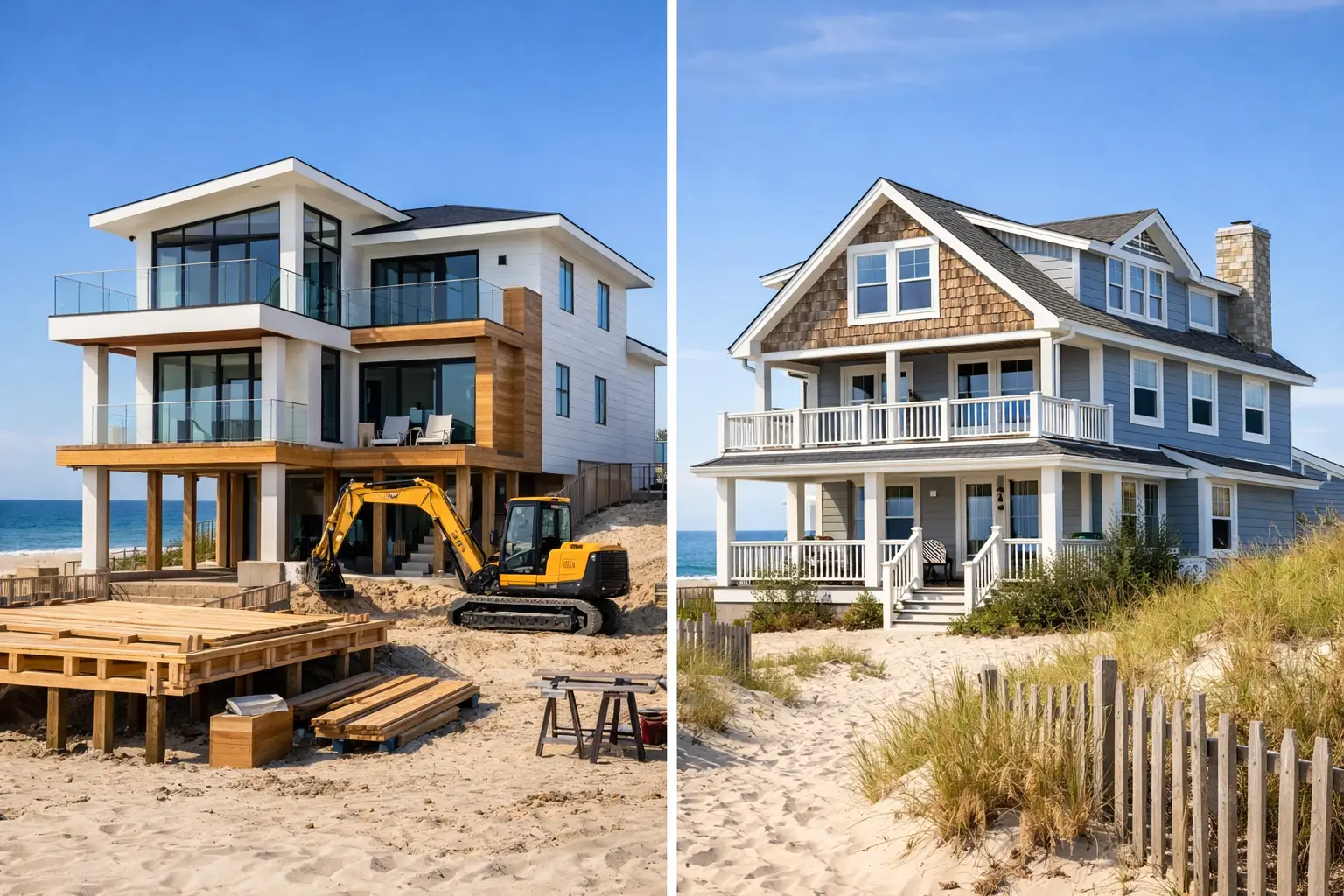
A beach house can look equally compelling on closing day whether it was finished six weeks ago or rebuilt around a 1990s shell. The real question in new construction vs renovated beach home decisions is not which one photographs better. It is which asset matches your risk tolerance, holding period, rental goals, and expected exit.
Along 30A, Panama City Beach, and the broader Emerald Coast, that choice carries more weight than it does in many inland markets. Coastal exposure, insurance costs, permitting history, storm resilience, design standards, and guest expectations all have a direct impact on ownership performance. For some buyers, new construction is the cleaner play. For others, a renovated property creates better basis, stronger location access, or more room for value growth. The right answer depends on how you plan to use the home and how disciplined you are about underwriting the details.
New construction vs renovated beach home: what really changes
The gap between these two property types is larger than finishes and age. New construction generally offers more predictability. Systems are current, code compliance is easier to evaluate, maintenance is usually lower in the near term, and the home may be better positioned for insurance and wind mitigation advantages. If your priority is operational ease, especially for a second home or vacation rental, that matters.
A renovated beach home can be more nuanced. Some are effectively like-new, with major systems, roof, windows, exterior envelope, and interiors all addressed properly. Others are cosmetic updates layered over older infrastructure. From the street, they may compete with newer inventory. From an ownership-cost perspective, they may not. The investment quality of a renovation depends on scope, workmanship, permits, and whether the work solved coastal wear issues instead of simply covering them.
The case for new construction
New construction tends to appeal to buyers who value control, efficiency, and a lower-friction ownership experience. In coastal markets, that profile is common among second-home buyers and investors who want an asset that can enter service quickly without a long post-closing project list.
The first advantage is deferred maintenance. Roof, HVAC, plumbing, electrical, windows, doors, appliances, and structural components should all have useful life ahead of them. That does not eliminate expenses, but it can reduce the odds of early capital surprises. For owners running short-term rentals, fewer unexpected repairs means fewer disruptions during peak booking periods.
The second advantage is code and resiliency. Newer homes are often built with updated wind-load standards, impact-rated components, elevated design considerations where applicable, and materials selected for salt-air durability. Those details can influence both insurance economics and long-term upkeep. In a coastal environment, construction quality is not just a comfort issue. It is part of the financial model.
There is also a marketability premium. Guests and buyers respond to modern layouts, higher ceiling heights, larger glass, integrated outdoor living, and turnkey presentation. If you plan to hold for several years and then resell into a lifestyle-driven market, newer product can attract strong demand.
That said, new construction is not automatically the best value. Buyers often pay a premium for freshness, and in some submarkets the pricing spread between new and renovated inventory can be substantial. If appreciation slows, a buyer who entered at the top of the finish-premium curve may see less upside than expected. New neighborhoods can also take time to mature aesthetically and socially, while older established areas may offer stronger location character from day one.
The case for a renovated beach home
A well-renovated property can be a sharper acquisition than many buyers assume. In prime coastal areas where vacant land is scarce or teardown economics are aggressive, renovated homes may provide access to better locations at a lower price point than comparable new construction.
That location advantage matters. Walkability, beach access, rental-friendly positioning, lot orientation, and neighborhood familiarity can outweigh the appeal of a newly built home in a less proven pocket. If you are buying for both lifestyle and long-term value retention, the address still does heavy lifting.
Renovated homes can also carry upside if the work was thoughtful and the basis remains favorable. A property that preserves a desirable footprint or lot while modernizing kitchens, baths, mechanicals, and exterior systems may compete well with newer product without matching new-construction pricing. For investors, that spread can improve yield.
But the underwriting must be tighter. A renovated beach home deserves a deeper review of permit history, contractor quality, timeline of improvements, pre-renovation condition, drainage, exterior envelope, and any remaining original systems. If the renovation skipped major components or handled them partially, future capital expenditures can arrive sooner than expected. In other words, a renovated home can offer better entry pricing, but only if the renovation was substantive.
Cost is more than purchase price
In new construction vs renovated beach home comparisons, buyers often focus too heavily on list price and not enough on total cost of ownership. That is where decisions improve or unravel.
Insurance should be reviewed early. Newer homes may benefit from construction standards and mitigation features that help on premiums, while older homes, even when updated, can still price differently depending on roof age, openings protection, elevation, and system documentation. The same is true for maintenance reserves. A renovated home with an older foundation, framing package, or site drainage challenges may demand more contingency planning than a recently completed build.
Taxes, HOA structure, furnishing requirements, and rental setup costs also matter. New construction can require significant post-closing spending if the home is delivered without a fully optimized rental package, pool equipment upgrades, or owner-preferred design enhancements. Renovated homes may already have some of that embedded. So while new construction may look cleaner on paper, the actual cash-to-stabilization number is not always lower.
Rental performance and guest appeal
For vacation rental buyers, the choice should be tied to demand drivers, not assumptions. Newer homes often perform well because they show better online, support larger groups, and align with current traveler expectations. Features like bunk rooms, resort-style pools, outdoor kitchens, and durable luxury finishes can lift nightly rates and occupancy.
A renovated beach home can still win if it offers the right location and experience. Proximity to the beach, a strong design identity, privacy, parking, and an authentic neighborhood setting can all support premium bookings. In some submarkets, guests care less about whether a home is technically new and more about whether it feels elevated, functional, and close to the coast.
Where investors get into trouble is assuming every renovation translates into rental lift. Cosmetic improvements rarely command the same premium as a full experience upgrade. If the home still has low ceilings, awkward circulation, limited outdoor living, or dated structural constraints, revenue may not rise enough to justify the acquisition basis.
Resale strategy should shape the purchase
Sophisticated buyers think about the exit before the offer. That is especially true in coastal real estate, where buyer pools can shift with rates, insurance trends, and supply.
New construction often enjoys broad appeal at resale because fewer buyers want immediate projects. It can be easier to market, simpler to inspect, and more attractive to out-of-state purchasers who want a turnkey asset. The downside is that if competing new inventory enters the market, resale differentiation can narrow quickly.
A renovated home can have stronger scarcity value if it occupies a more established or hard-to-replace location. That can support resilience during slower cycles. But resale strength depends on whether future buyers view the renovation as complete and credible. If they see deferred work behind the walls, they will discount for it.
How to decide with discipline
The strongest approach is to match the asset to the objective. If you want a lower-maintenance second home with immediate usability, strong guest appeal, and fewer near-term unknowns, new construction may justify the premium. If you are willing to do more diligence in exchange for a better location, lower basis, or potential upside, a renovated beach home can be the more strategic buy.
This is where broker-level advisory matters. In markets like 30A and Panama City Beach, the quality of the renovation, the relevance of the location, and the impact of insurance and rental economics can materially change returns. Venture South Real Estate often helps buyers weigh those variables beyond the listing photos and staging package, because the best coastal purchases are usually the ones that hold up under scrutiny.
A beach home should feel like a lifestyle upgrade, but it should also perform like a sound decision. The smartest buyers do not chase new or renovated as a category. They buy the property that best aligns with how they plan to own it.