
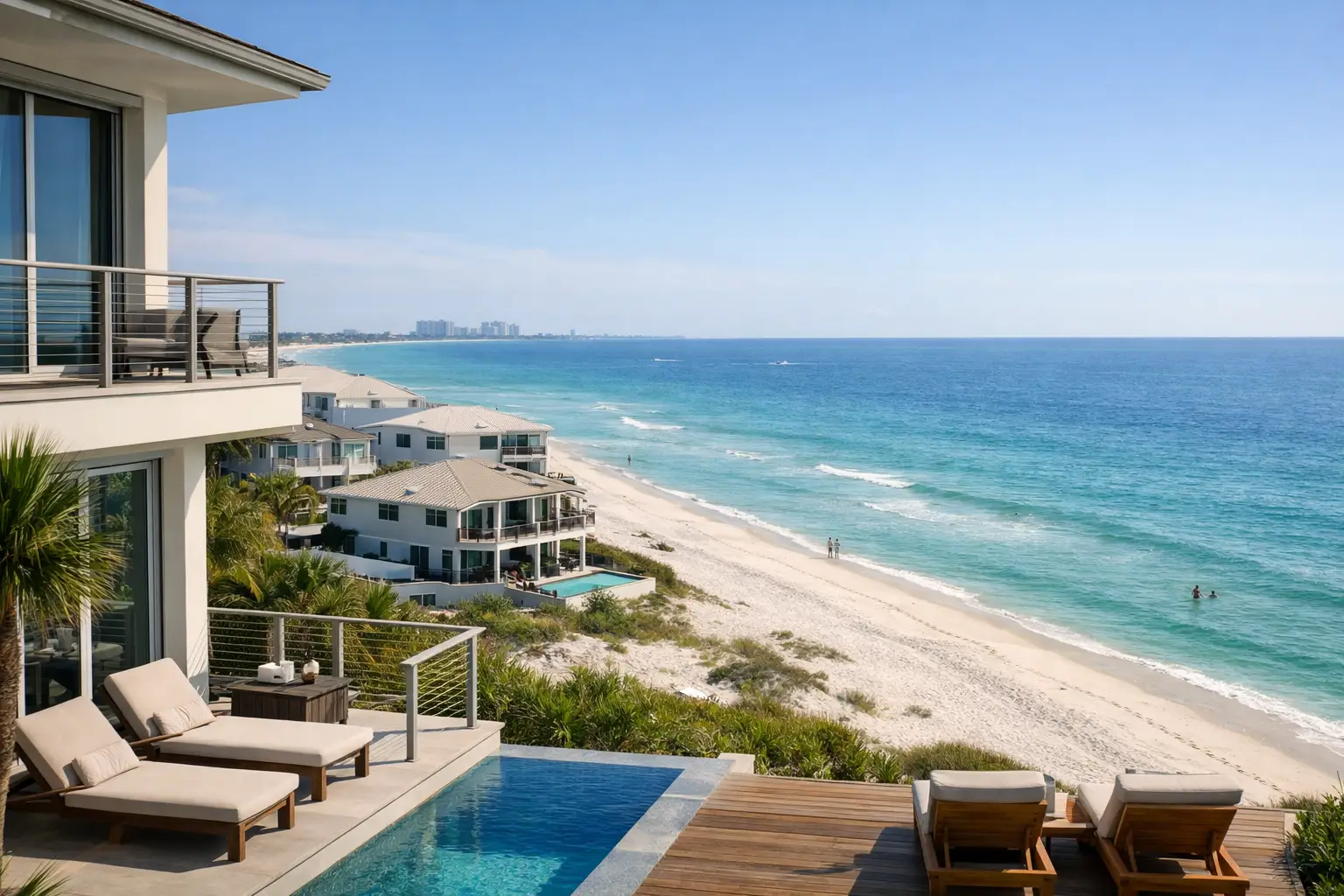
A gulf-front address does two things at once – it sells a lifestyle most buyers want and creates an asset class with unusually tight supply. That is why the question, is gulf front property a good investment, deserves a more disciplined answer than a simple yes or no. In the right market, at the right basis, and with a clear hold strategy, gulf-front real estate can be a strong long-term performer. But it is not forgiving of weak underwriting.
Is Gulf Front Property a Good Investment in Florida?
In many Florida coastal markets, gulf-front property has historically benefited from a basic advantage that is hard to replicate: there is only so much true beachfront inventory. You can build near the water, across from the water, or with a water view, but you cannot manufacture more direct gulf frontage. That scarcity tends to support pricing power over time, especially in high-demand corridors where luxury demand, second-home ownership, and vacation rental activity overlap.
Along the Emerald Coast, that dynamic is particularly relevant. Buyers are not only acquiring square footage. They are buying direct beach access, unobstructed views, rental appeal, and a resale position that remains competitive even when broader housing markets normalize. For investors with a long horizon, scarcity is often the first reason gulf-front assets outperform more commoditized coastal product.
That said, premium assets require premium analysis. A gulf-front property can be a good investment, but not every gulf-front purchase is a good deal.
What Actually Drives Returns
The return profile on gulf-front real estate usually comes from a combination of appreciation, income, and portfolio quality.
Appreciation is often the headline story. Prime coastal real estate tends to hold value well because demand is emotional as well as financial. High-net-worth buyers are not purely rate-sensitive, and trophy locations often recover faster than secondary inventory after market disruptions. Properties with strong frontage, better elevation, updated finishes, and superior walkability typically capture the most durable appreciation.
Rental income can materially improve the investment case, especially in markets with established vacation demand. Gulf-front homes and condos often command premium nightly rates because renters consistently pay for direct access and panoramic views. In the right submarket, that revenue can offset carrying costs and improve total return. But income should be modeled carefully. Gross revenue is not the same as net performance, and coastal operating costs can narrow margins quickly.
There is also a balance-sheet argument. Many investors buy gulf-front property because they want capital parked in a hard asset with both utility and status. If the property can serve as a second home, a family legacy asset, and an appreciating investment, the ownership case becomes broader than a standard yield calculation.
The Costs That Separate Smart Buys From Expensive Mistakes
The strongest gulf-front investments are not judged by purchase price alone. They are judged by the relationship between price, income potential, risk exposure, and exit flexibility.
Insurance is one of the first variables serious buyers need to pressure-test. Gulf-front exposure can mean higher premiums, tighter underwriting, and changing carrier requirements. Flood risk, wind coverage, deductibles, roof age, and construction standards all matter. A property that looks attractive on gross yield can become much less compelling once insurance and reserves are modeled accurately.
Maintenance is another major factor. Salt air, wind, humidity, and sun accelerate wear on exteriors, windows, HVAC systems, decks, pools, and mechanical components. Deferred maintenance is costly in any market, but on the Gulf it can directly affect guest experience, resale value, and insurability. Well-maintained property usually deserves a premium because it reduces near-term capital expenditure risk.
Financing can also change the equation. Lender standards for coastal condos, non-warrantable projects, or high-value second homes may be more restrictive than buyers expect. If leverage is part of the strategy, debt terms should be reviewed early, not after a deal is emotionally decided.
Gulf-Front Homes vs. Gulf-Front Condos
When clients ask whether gulf front property is a good investment, the better follow-up question is often which kind of gulf-front property.
Single-family homes typically offer more control, more privacy, and stronger long-term scarcity, particularly when they sit on prime lots with meaningful frontage. They can also provide stronger upside through renovation or repositioning. The trade-off is cost. Homes usually carry higher acquisition prices, larger maintenance responsibilities, and more operational complexity if used as a rental.
Condos can be more efficient from an ownership and rental standpoint, particularly for investors who want direct gulf exposure without managing a standalone structure. Some buildings offer excellent rental performance, professional management frameworks, and lower maintenance burden at the unit level. But condo buyers need to underwrite the association with the same scrutiny they apply to the unit. Reserve strength, special assessment risk, building condition, rental restrictions, and fee structure all affect investment quality.
A gulf-front condo in a superior building can outperform a weaker house in a compromised location. Asset selection matters more than property type in the abstract.
Location Quality Is Not All Equal
The phrase gulf-front sounds definitive, but market performance varies significantly even within the same coastline.
Some stretches of beachfront have stronger luxury demand, tighter zoning, better beach width, or more consistent short-term rental appeal. Others are more seasonal, more exposed to inventory swings, or less resilient at higher price points. Walkability, dining access, beach quality, roadway access, and neighborhood identity all influence demand from both end users and renters.
This is where local market intelligence matters. Along 30A, South Walton, and Panama City Beach, small geographic differences can produce very different outcomes in occupancy, nightly rate strength, buyer demand, and resale velocity. Two gulf-front properties may look similar on listing sheets and perform very differently over a five-year hold.
Is Gulf Front Property a Good Investment for Short-Term Rentals?
It can be, but only if the revenue story survives a realistic expense model.
Gulf-front rentals benefit from strong consumer demand because beach access is easy to market and easy to monetize. Premium view corridors and direct sand access often support higher average daily rates and stronger booking windows than inland or lower-tier coastal inventory. For investors focused on cash flow, that advantage is meaningful.
Still, investors should avoid simplistic pro formas. Occupancy assumptions, seasonality, management fees, cleaning costs, utilities, furnishing budgets, taxes, insurance, HOA dues where applicable, and replacement reserves need to be accounted for. Rental regulations also matter. Markets and associations can change rules, and policy shifts can alter the income profile of an asset faster than many buyers expect.
The best short-term rental investments are usually properties that work under conservative assumptions, not just peak-season projections.
Where Gulf-Front Investing Gets Its Edge
Gulf-front real estate tends to be most compelling when three conditions align: the asset is truly scarce, the basis is defensible, and the hold period is long enough to absorb market cycles.
This is not typically a quick-flip category. Transaction costs are meaningful, and premium coastal markets can be volatile in the short term. Investors who perform best are usually those who buy selectively, improve intelligently, and hold through multiple demand cycles. They understand that a trophy asset purchased badly can still underperform, while a well-bought coastal property with disciplined management can compound value for years.
There is also a behavioral edge here. Exceptional waterfront assets attract a wider buyer pool than many standard investment properties because they appeal to investors, second-home buyers, and luxury lifestyle purchasers at the same time. That broader demand base can strengthen liquidity when it is time to sell.
When the Answer Is No
Gulf-front property is not automatically a good investment if the buyer needs immediate cash flow at thin margins, cannot tolerate insurance volatility, or is purchasing primarily on emotion without an exit plan. It is also less attractive when the property has functional obsolescence, weak rental usability, unresolved building issues, or a price level that already assumes best-case future appreciation.
For some buyers, a property one row off the beach or in a high-performing near-coastal location can offer a better risk-adjusted return. Lower basis, lower carrying costs, and strong rental demand can produce better overall performance than paying top dollar simply for direct frontage.
That is why disciplined acquisition matters more than headline location alone.
The right gulf-front purchase can deliver appreciation, premium rental demand, and a level of long-term scarcity that is hard to match in residential real estate. But the best results usually go to buyers who underwrite coastal risk with the same seriousness they apply to coastal upside. If the asset fits your hold strategy, your cash flow requirements, and your tolerance for ownership costs, gulf-front can be more than a beautiful property – it can be a very strategic one.