A gulf view can command a premium, but the shoreline supporting that view is not static. Knowing how to assess beach erosion before buying coastal property is a core part of coastal due diligence, particularly along Florida’s 30A corridor, Panama City Beach, and the Emerald Coast. The question is not simply whether sand has moved. It is whether the property’s physical setting, regulatory position, insurability, rental appeal, and resale prospects can withstand shoreline change over the holding period.
Beach erosion is not automatically a reason to walk away from a transaction. Some areas experience seasonal sand movement, benefit from well-managed nourishment programs, or have dunes and setbacks that provide meaningful protection. The investment decision depends on the property’s exact location, the rate and pattern of change, and the cost of managing the risk.
Start With the Property’s Position on the Beach
Begin with what is immediately visible, but do not mistake a single beach day for a complete assessment. Walk the property and the adjacent shoreline at different tide conditions if possible. Look at the distance between the home, pool, walkover, dune line, and waterline. A wide dry-sand beach can be encouraging, yet it does not prove long-term stability. Conversely, a narrower beach may reflect normal seasonal conditions rather than a permanent loss.
The more informative question is how much room exists between improvements and the active beach system. Gulf-front homes with established dune systems, vegetated buffers, and substantial separation from the shoreline generally have more physical resilience than homes built close to the edge with little natural protection.
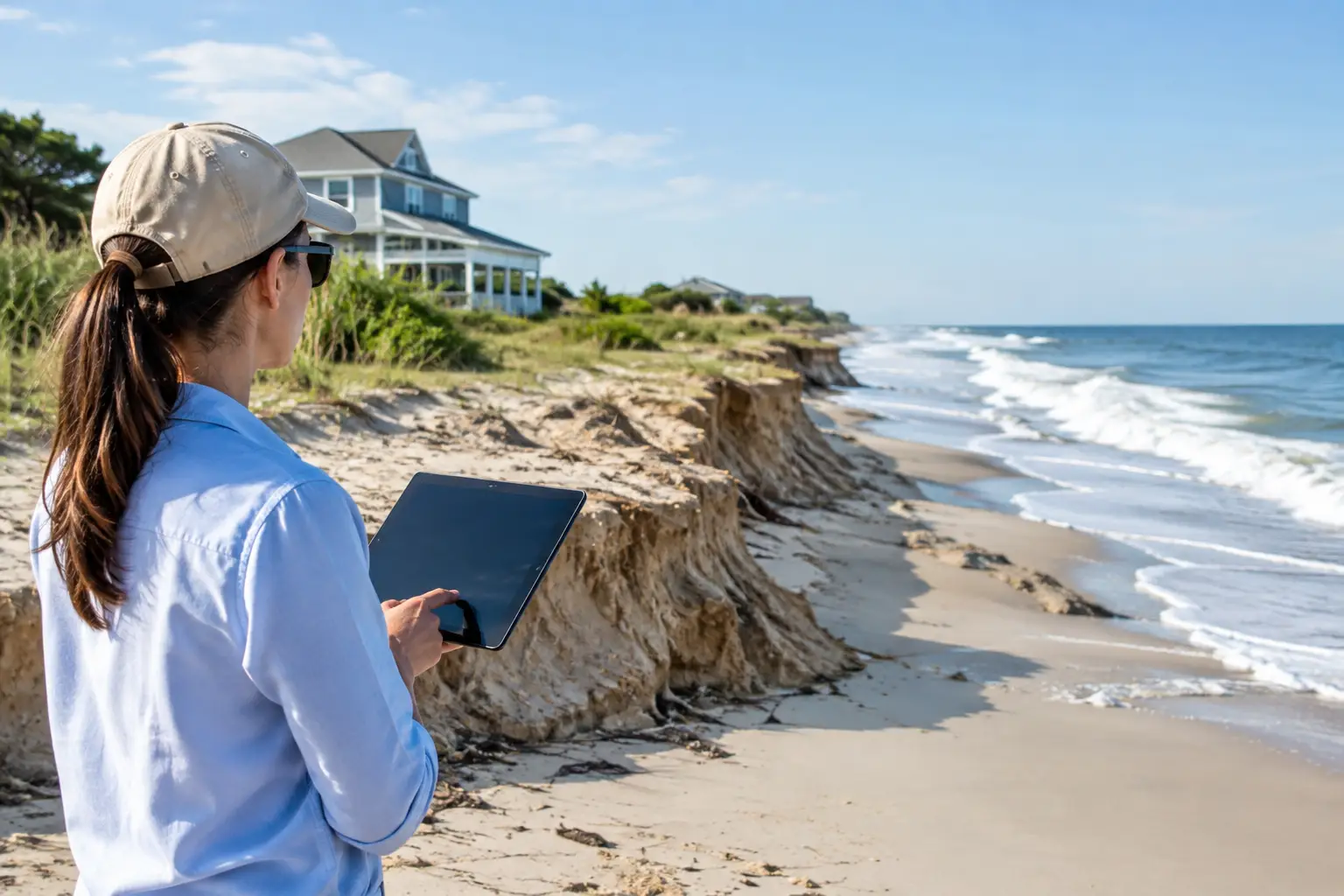
Pay close attention to visible signs of stress: steep scarps in the dune face, exposed roots, undermined walkovers, damaged stair foundations, leaning retaining features, or a clear loss of sand around neighboring structures. These conditions do not establish a trend on their own, but they warrant closer review.
Review Historical Shoreline Change, Not Just Current Conditions
The most valuable erosion evidence is historical. Ask for aerial imagery spanning multiple years, prior surveys, beach-management reports, and records of past storm impacts. Comparing old imagery to current conditions can reveal whether the shoreline has been relatively stable, gradually retreating, or changing sharply after major weather events.
Aerial images should be interpreted carefully. Tide level, camera angle, seasonal beach width, and recent nourishment can all make a shoreline appear materially different from one image to another. Still, a multi-year sequence often identifies patterns that a current listing photo cannot.
For a serious acquisition, commission a current boundary and elevation survey from a qualified surveyor familiar with coastal property. The survey should clarify the relationship between the improvements, recorded property lines, dunes, and relevant coastal control or setback lines. Do not assume the apparent beach area in front of a home is privately owned, buildable, or permanently available for exclusive use.
In Florida, coastal construction is subject to specialized regulation, including the Coastal Construction Control Line in applicable areas. That line can affect rebuilding, additions, pools, dune walkovers, and protective measures. A property may be highly desirable today while carrying meaningful constraints if future repairs or reconstruction become necessary.
Separate Seasonal Movement From Structural Retreat
Many Gulf beaches naturally narrow during stormier months and rebuild during calmer periods. This cycle is different from chronic erosion, where the shoreline trend moves landward over years or decades. Local professionals can help distinguish the two, but buyers should request evidence rather than rely on broad assurances that a beach “always comes back.”
Also consider whether a recent beach nourishment project is influencing current conditions. Nourishment can restore width, improve recreational appeal, and support property values. It can also be temporary, expensive, and dependent on future public approvals and funding. Understand when the work occurred, who funded it, whether additional renourishment is planned, and whether local assessments may apply.
Evaluate the Dune System as an Asset
Dunes are not just scenery. They are part of the property’s protective infrastructure. A healthy dune system can absorb storm energy, hold sand in place, and create distance between coastal improvements and wave action. On the Emerald Coast, sea oats and other native vegetation are practical indicators of dune health, though their presence alone is not a guarantee of stability.
Look for dune continuity across neighboring parcels. A single property with an intact dune may still be vulnerable if nearby dunes have been removed, cut through, or repeatedly damaged. Likewise, an elevated walkover designed to avoid compressing vegetation is generally more favorable than a heavily trafficked informal path over the dune.
Dunes also create trade-offs. They can partially obstruct a direct water view, and their protected status may limit landscaping or access changes. For most long-term owners, that constraint is often preferable to the exposure that comes with a flattened or depleted dune line.
Investigate Storm History and Prior Repairs
Ask sellers for disclosures, insurance claims history when available, invoices, permits, photographs, and details of prior storm-related repairs. Specifically, determine whether the property has experienced water intrusion, foundation exposure, damaged decks, lost stairs, compromised retaining structures, or repeated dune restoration.
The condition of neighboring homes matters as well. If several properties have recently raised structures, replaced walkovers, rebuilt pools, or installed temporary protective measures, that activity may signal a recurring shoreline-management issue. It may also reflect normal maintenance after a major storm. Context is everything.
A coastal engineer or qualified inspector should evaluate any visible structural concern. A standard home inspection is essential, but it may not answer questions about beach processes, dune stability, wave exposure, or the feasibility of future protective work. On a high-value gulf-front purchase, specialized analysis is often a prudent expense.
Price the Risk Through Insurance, Maintenance, and Resale
Erosion risk ultimately shows up in the economics. Before the end of a due-diligence period, obtain property-specific flood and wind insurance quotes, not informal estimates. Review deductibles, exclusions, elevation requirements, and the availability of coverage after a loss. Insurance markets can change quickly in Florida, so current terms matter more than assumptions based on a neighbor’s policy or last year’s premium.
Build a realistic reserve for coastal maintenance. Salt air, wind, sand, and storm exposure already increase the cost of exterior upkeep. A property with shoreline pressure may require added spending on walkovers, dune restoration, drainage, landscaping, engineering review, and permitted repairs. If the home is a vacation rental, account for the possible revenue impact of beach-access disruptions, construction, storm recovery, or a temporarily narrowed beach.
Resale positioning deserves equal attention. A buyer pool for premier gulf-front property is deep, but sophisticated buyers increasingly ask informed questions about setbacks, dunes, flood exposure, insurance, and post-storm condition. A home with a documented history of thoughtful maintenance, strong setbacks, and clear coastal records is easier to defend when it is time to sell.
Use a Local Team and a Property-Specific Decision Framework
No two beachfront parcels carry the same risk profile. Conditions can vary block by block based on orientation, inlet dynamics, dune quality, public access patterns, engineered structures, and local management practices. General market commentary is useful, but it should never replace parcel-level review.
For a meaningful coastal acquisition, coordinate your real estate advisor, surveyor, inspector, insurance professional, and, when conditions warrant, a coastal engineer or land-use attorney. The goal is not to eliminate every coastal risk. It is to understand what you are buying, quantify likely costs, and negotiate from a position of evidence.
The strongest gulf-front investments are rarely chosen on view alone. They are chosen when the beach, the improvements, the regulations, and the financial model all support the same long-term thesis.