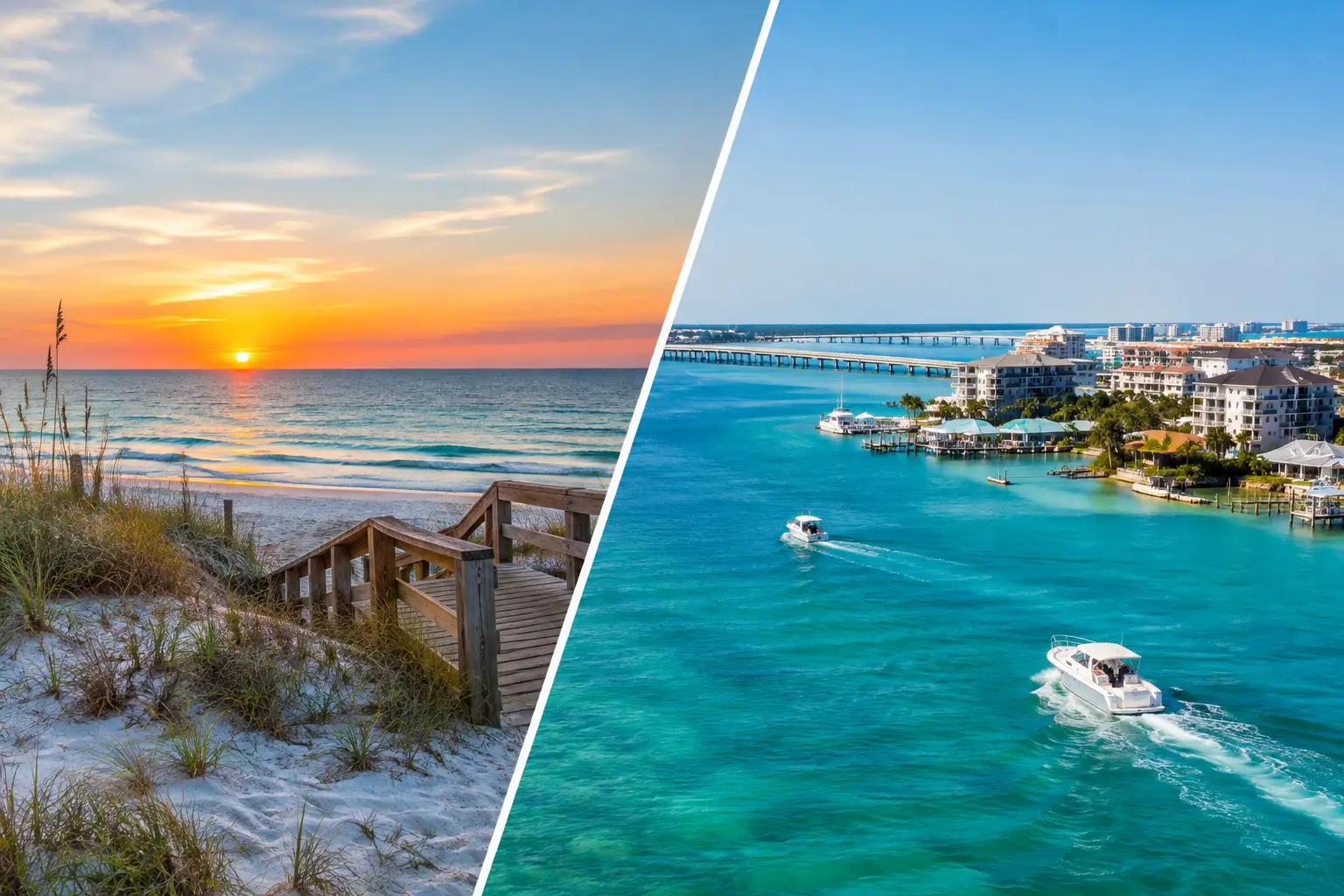
A few miles can produce a materially different coastal real estate decision. In the question of South Walton versus Destin, buyers are not simply choosing a beach. They are choosing a property profile, rental strategy, ownership experience, buyer pool, and long-term exit position.
Both markets benefit from the Emerald Coast’s white sand, clear water, and enduring second-home demand. Yet they operate differently. Destin is established, active, and convenient, with a broad mix of condos, waterfront homes, marinas, restaurants, and attractions. South Walton, particularly along Scenic Highway 30A, is more design-led and community-driven, with distinct beach neighborhoods that can command a premium for scarcity and character.
The right choice depends on what the asset needs to accomplish. A family seeking convenience may prioritize one set of variables. An investor underwriting vacation rental income, or a seller positioning a luxury home for a selective buyer, should weigh another.
The Core Difference Between South Walton and Destin
Destin is a city in Okaloosa County with a longstanding identity as a fishing, boating, and family vacation destination. Its inventory spans high-rise Gulf-front condominiums, harbor-area residences, gated communities, canal homes, and single-family properties close to beaches, shopping, and dining. It is a market with real range, which creates opportunities at multiple price points and for several ownership strategies.
South Walton refers to the coastal portion of Walton County, including communities such as Miramar Beach, Sandestin, Santa Rosa Beach, Blue Mountain Beach, Grayton Beach, WaterColor, Seaside, Seagrove, Alys Beach, Rosemary Beach, and Inlet Beach. These communities do not trade as one uniform market. Each has its own architectural standards, beach access patterns, rental behavior, lot scarcity, and buyer expectations.
That distinction matters because South Walton often sells a more curated ownership experience. In many 30A communities, walkability, streetscape, local retail, protected dune systems, community planning, and architectural consistency influence value as much as bedroom count or proximity to the Gulf. Destin can deliver excellent waterfront access and a more active resort environment, but its value proposition is usually less dependent on a single lifestyle brand or neighborhood identity.
Lifestyle: Energy, Access, and Daily Use
For owners who will use a property frequently, lifestyle fit should not be treated as a soft consideration. It affects how often the home is enjoyed, which improvements make sense, and who will likely buy it later.
Destin Offers Convenience and Activity
Destin appeals to buyers who want immediate access to boating, charter fishing, harbor dining, retail, and a full calendar of family-oriented activity. The city is compact relative to the wider 30A corridor, and many owners appreciate being close to services without planning an entire day around a beach outing or dinner reservation.
The trade-off is traffic. During peak season, major routes and popular beach access points can become congested. For some buyers, that is a manageable cost of being in the center of the action. For others, especially those seeking a quieter second-home experience, it can reduce the appeal of frequent personal use.
South Walton Emphasizes Place and Pace
South Walton is not uniformly quiet, particularly during spring break and summer, but its best-known communities generally feel more residential and intentionally composed. Alys Beach, Rosemary Beach, Seaside, WaterColor, and Grayton Beach each offer a distinct experience, from formal architecture and private amenities to a more eclectic, old-Florida character.
The appeal is often walkability. Owners can bike to coffee, dinner, the beach, and neighborhood events without relying on a car for every outing. That lifestyle carries meaningful value for second-home buyers, but it also means property selection must be precise. Being one or two blocks farther from beach access, a town center, or a preferred amenity can alter both enjoyment and marketability.
Rental Potential Is Not Just a Revenue Question
Vacation rental income is a central consideration across both markets, but gross revenue should never be the sole decision metric. The stronger question is whether a property can produce durable net income after management fees, insurance, taxes, HOA dues, repairs, furnishing, reserves, and periods of softer demand.
Destin’s broad visitor appeal can support consistent vacation rental interest. Condominiums with beach access, resort amenities, and manageable ownership requirements may offer a practical entry point for investors who want rental income without the maintenance burden of a large single-family home. Harbor, bay, and boating-oriented properties can also attract a different but valuable guest profile.
South Walton properties may command higher rates when they are correctly located, well designed, and professionally positioned. Larger homes near the beach, properties with pools, and residences in recognizable 30A communities can perform well with multigenerational families and premium vacationers. However, purchase prices, HOA fees, insurance costs, and furnishing expectations can be significantly higher. A strong gross-rent number does not automatically translate into superior returns.
Before underwriting either market, confirm the specific property’s rental rules. Municipal regulations, HOA covenants, condominium association restrictions, parking requirements, occupancy limits, and amenity access can all affect revenue potential. A home marketed as rental-friendly may still be a poor operational fit if its carrying costs or restrictions are not fully understood.
South Walton Versus Destin for Property Value
When comparing South Walton versus Destin from an appreciation and resale perspective, scarcity is one of the defining variables. Certain South Walton communities have limited land, tightly managed development, and a national buyer base that values design, beach proximity, and brand recognition. Those conditions can support pricing resilience, particularly for distinctive homes in prime locations.
That does not mean every South Walton property is automatically a better investment. A heavily improved home on a less desirable street, a unit with restrictive rental policies, or a property carrying unusually high expenses may underperform a well-bought Destin asset. Location quality remains highly granular along the coast.
Destin’s advantage is depth and accessibility. The market attracts vacation buyers, retirees, boating enthusiasts, investors, and full-time residents, creating a broad resale audience. Well-located Gulf-front condos, harbor properties, and homes with protected-water access can retain strong demand because their use cases are clear and difficult to replicate.
For sellers, the distinction affects positioning. A South Walton listing may require a campaign centered on architectural pedigree, walkability, beach access, and community cachet. A Destin property may be best positioned around boating capability, rental history, views, amenity value, or proximity to the harbor and Gulf. Premium pricing requires a narrative that matches how qualified buyers actually evaluate the asset.
Insurance, Maintenance, and Ownership Costs
Coastal ownership requires disciplined planning in either market. Insurance availability and premium costs can materially influence a buyer’s budget and an investor’s return. Roof age, elevation, construction standards, flood-zone classification, wind mitigation features, and claims history deserve attention before the contract period ends.
Condominiums require additional review. Buyers should examine association financials, reserve funding, pending assessments, rental rules, management quality, deferred maintenance, and the condition of major systems. A lower purchase price can lose its appeal quickly if a building has significant capital needs or weak reserves.
Single-family homes create a different set of obligations. Pools, decks, exterior finishes, HVAC systems, landscaping, and beach-oriented furnishings all require regular attention in a humid, salt-air environment. Larger South Walton homes may offer exceptional rental and lifestyle upside, but they should be acquired with realistic operating reserves. The same discipline applies to Destin waterfront homes, where docks, seawalls, lifts, and marine exposure add another layer of maintenance responsibility.
Which Market Fits Your Objective?
Destin may be the stronger fit for buyers who value boating access, convenience, varied inventory, resort amenities, and an energetic vacation setting. It can also be compelling for investors seeking a more straightforward condo or resort-property strategy, provided the association and operating numbers are sound.
South Walton may be the better fit for buyers who place a premium on 30A lifestyle, design, walkability, and neighborhood distinction. It often suits second-home owners seeking a more curated experience and investors willing to pay for scarcity, premium guest demand, and superior location quality.
There are exceptions. Miramar Beach and Sandestin can offer a bridge between the two, combining South Walton addresses with resort access and proximity to Destin conveniences. Likewise, parts of Destin can feel private and highly residential, especially when a property has meaningful water access or sits within a well-established enclave. The address is a starting point, not the investment thesis.
A successful coastal purchase begins with a clear hierarchy: personal use, rental income, appreciation, privacy, boating, walkability, or ease of ownership. Once that hierarchy is defined, the market decision becomes less emotional and far more precise. The strongest property is rarely the one with the broadest appeal online. It is the one whose location, operating profile, and resale story align with the way you intend to own it.